Belmead (Additional Documentation)

Why it's listed
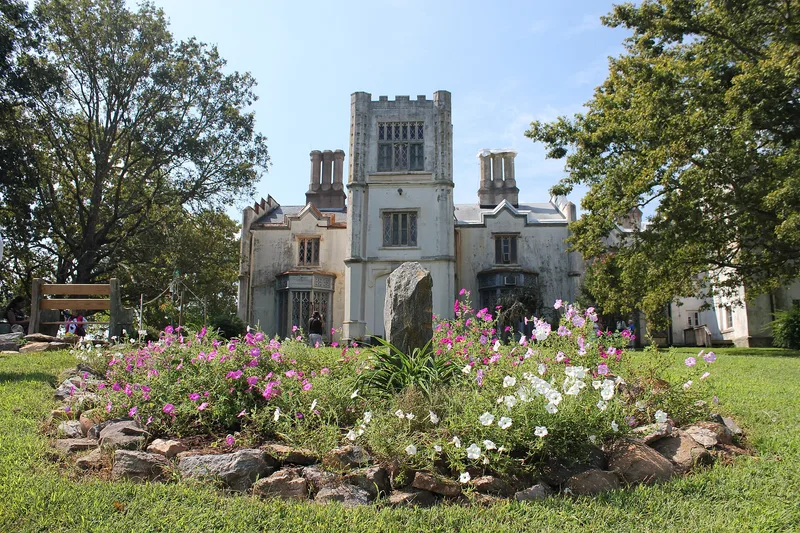
Belmead is a Gothic Revival villa in Powhatan County, Virginia, begun around 1845 for Philip St. George Cocke, a progressive agronomist and later Confederate brigadier general. Alexander Jackson Davis designed the two-story stuccoed brick house, which has a gable roof, stepped gable ends, clustered chimney stacks, and square towers with Tudor-arched openings and crenellations. Inside, tall double doors, coffered ceilings and marble mantels repeat the Tudor arch. Davis adapted a Northern style into a more open design suited to Southern living, and Belmead and Staunton Hill are the state's only major examples of it. After several changes of ownership, the estate was bought in the 1890s by Edward and Louise Morrell of Philadelphia, who conveyed it in 1897 to the Sisters of the Blessed Sacrament. They founded a school for Indians and Black students there. The house still serves as the center of the school, with additions and superficial interior changes.
Machine-generated summary. This summary was generated by a language model from the official nomination document and has not been reviewed line by line by an editor. It may contain errors. Check the source document before relying on any detail. Source: nomination document (PDF) · catalog entry. Generated October 2026 (model claude-sonnet-5-5, prompt v1.0-2026-10-29).
| Period of significance | 19th Century (specific date 1845) |
|---|---|
| Styles | Gothic Revival / Gothic Villa |
| Areas of significance | Education, Architecture, Religion, Social History, Agriculture, Ethnic Heritage-Black |
| Acreage | 439 |
| Boundary source | NPS cultural-resource GIS polygon |
| Full listing page | Belmead (Additional Documentation) (property record) |
What listing means for this property
This is a historic district. Buildings within its boundary are either contributing (they add to the district's significance) or non-contributing. Owners of contributing income-producing buildings can claim the 20% federal rehabilitation tax credit; homeowners should look at state credits. National Register districts impose no design review by themselves; a local historic district ordinance, if one exists, does (the difference explained).
General information, not legal or tax advice. Rules change; confirm with your State Historic Preservation Office or a qualified adviser.