Fairmount-Southside Historic District (Boundary Increase)

Why it's listed
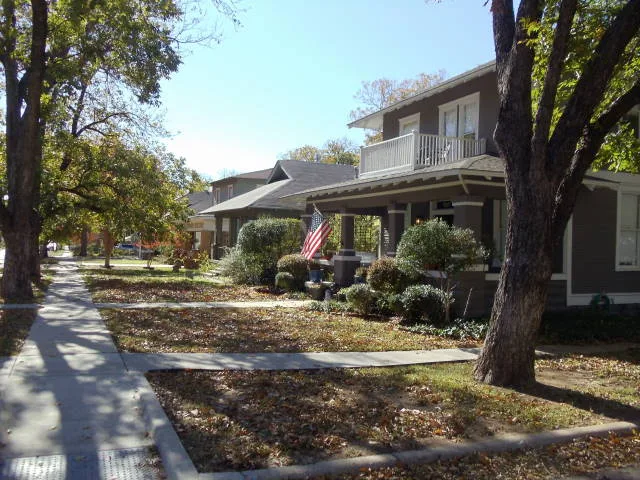
This boundary extension adds about six acres at the northeastern corner of Fort Worth's Fairmount/Southside district, roughly bounded by Magnolia, Hemphill, Allen, Travis and Morphy. It contains retail buildings from the mid-1920s to early 1950s, two small bungalow-type houses, a club building, a community center and a c. 1921 Catholic school with Classical Revival influences. Most commercial buildings are simple one- or two-part load-bearing brick blocks, often with shops below and apartments above. The buildings grew up along streetcar lines serving the Southside after railroads and the meat packing industry drove the city's expansion. Examples include the Modern Drugs building, the LaCava Cleaners building, the Little Diner and the Laneri School, built by businessman John B. Laneri. Seven resources contribute and five do not, several because they were under 50 years old. The extension was added because the original boundaries omitted buildings that developed to serve the neighborhood between 1921 and 1948.
Machine-generated summary. This summary was generated by a language model from the official nomination document and has not been reviewed line by line by an editor. It may contain errors. Check the source document before relying on any detail. Source: nomination document (PDF) · catalog entry. Generated October 2026 (model claude-sonnet-5-5, prompt v1.0-2026-10-29).
| Period of significance | 1921 - 1948 |
|---|---|
| Styles | 2-Part Commercial Block; 1-Part Commercial Block; Late 19th and 20th Century Revivals: Classical Revival |
| Areas of significance | Architecture, Community Planning and Development |
| Acreage | 6 |
| Boundary source | NPS cultural-resource GIS polygon |
| Full listing page | Fairmount-Southside Historic District (Boundary Increase) (property record) |
What listing means for this property
This is a historic district. Buildings within its boundary are either contributing (they add to the district's significance) or non-contributing. Owners of contributing income-producing buildings can claim the 20% federal rehabilitation tax credit; homeowners should look at state credits. National Register districts impose no design review by themselves; a local historic district ordinance, if one exists, does (the difference explained).
General information, not legal or tax advice. Rules change; confirm with your State Historic Preservation Office or a qualified adviser.