University of Pennsylvania Campus Historic District

Why it's listed
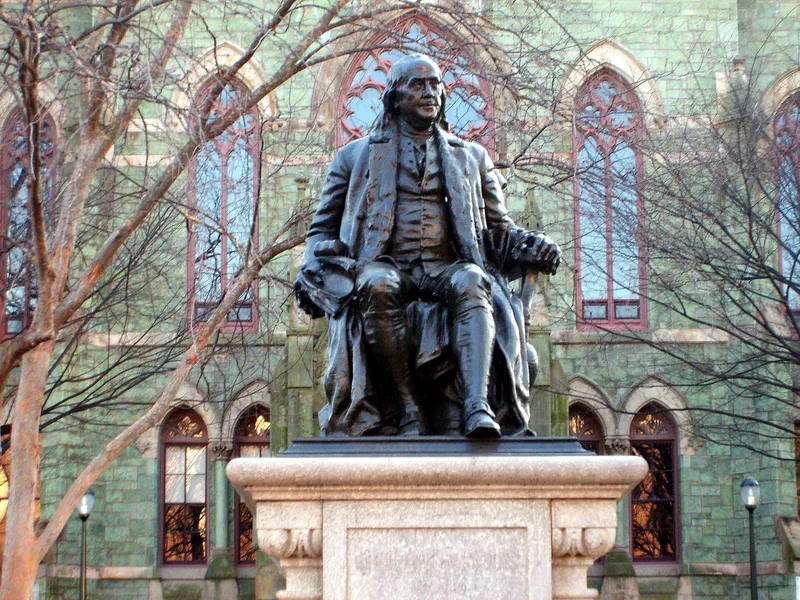
The University of Pennsylvania campus district occupies the core of the university's West Philadelphia site, which it moved to in 1872. Its buildings range from the Italian Gothic College Hall and Logan Hall by Thomas W. Richards, completed in 1871 to 1874, to the Jacobethan dormitories built between 1895 and 1910 by Cope and Stewardson along Hamilton Walk. The University Museum, begun in 1895 with work by Wilson Eyre, Cope and Stewardson, and Frank Miles Day, shows a northern Italian Romanesque character. Frank Furness's Library, built from 1888 to 1891, is one of his surviving buildings in Philadelphia. The district also includes Franklin Field, the 1904 Weightman Hall gymnasium and the Towne Building. The nomination treats the district as an architectural showcase of the campus, and the 1964 Richards Medical Research Building by Louis I. Kahn is cited as one of the most consequential buildings built after 1945.
Machine-generated summary. This summary was generated by a language model from the official nomination document and has not been reviewed line by line by an editor. It may contain errors. Check the source document before relying on any detail. Source: nomination document (PDF) · catalog entry. Generated October 2026 (model claude-haiku-5-5, prompt v1.1-2026-10-29).
| Styles | Collegiate Gothic; English Gothic; Jacobethan; Italian Gothic; Italian Renaissance |
|---|---|
| Areas of significance | Education, Architecture |
| Acreage | 117 |
| Boundary source | NPS cultural-resource GIS polygon |
| Full listing page | University of Pennsylvania Campus Historic District (property record) |
What listing means for this property
This is a historic district. Buildings within its boundary are either contributing (they add to the district's significance) or non-contributing. Owners of contributing income-producing buildings can claim the 20% federal rehabilitation tax credit; homeowners should look at state credits. National Register districts impose no design review by themselves; a local historic district ordinance, if one exists, does (the difference explained).
General information, not legal or tax advice. Rules change; confirm with your State Historic Preservation Office or a qualified adviser.