Pittsburgh Central Downtown Historic District (Boundary Increase)

Why it's listed
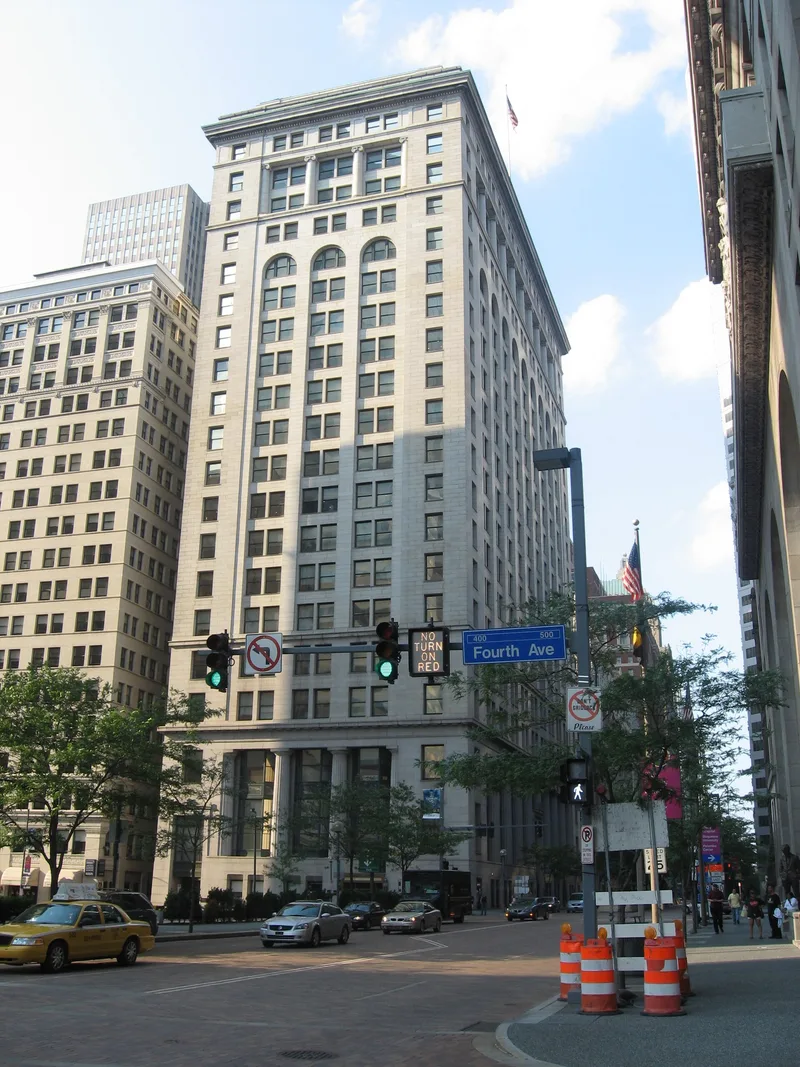
Downtown Pittsburgh's central business district holds this concentration of commercial and institutional buildings, mostly dating from the 1870s through the 1930s. The district includes four churches built between 1870 and 1925 in several Gothic Revival modes, including Trinity Cathedral, whose churchyard holds graves from the late eighteenth century. Banks, department stores, hotels and office towers line Grant Street and nearby avenues. The Frick Building of 1901 was among the first slab skyscrapers in the city, and the Koppers and Gulf Buildings of the 1930s show Art Deco detailing. The William Penn Hotel, Union Arcade and Kaufmann's store are among the notable works. Mellon Bank and the Mellon family's financial history are central to the district's story. Its significance rests on the density and variety of these buildings, many of them designed by nationally known architects, and on their role in Pittsburgh's growth into a major industrial city.
Machine-generated summary. This summary was generated by a language model from the official nomination document and has not been reviewed line by line by an editor. It may contain errors. Check the source document before relying on any detail. Source: nomination document (PDF). Generated October 2026 (model claude-haiku-5-5, prompt v1.1-2026-10-29).
| Period of significance | 1850-1935 |
|---|---|
| Styles | Gothic Revival; Romanesque; Neo-Classical; Renaissance Revival; Art Deco; Commercial Style; Flemish Gothic; Eclecticism |
| Areas of significance | Architecture, Commerce |
| Acreage | 8.1 |
| Boundary source | NPS cultural-resource GIS polygon |
| Full listing page | Pittsburgh Central Downtown Historic District (Boundary Increase) (property record) |
What listing means for this property
This is a historic district. Buildings within its boundary are either contributing (they add to the district's significance) or non-contributing. Owners of contributing income-producing buildings can claim the 20% federal rehabilitation tax credit; homeowners should look at state credits. National Register districts impose no design review by themselves; a local historic district ordinance, if one exists, does (the difference explained).
General information, not legal or tax advice. Rules change; confirm with your State Historic Preservation Office or a qualified adviser.