Penn-Liberty Historic District (Boundary Increase)

Why it's listed
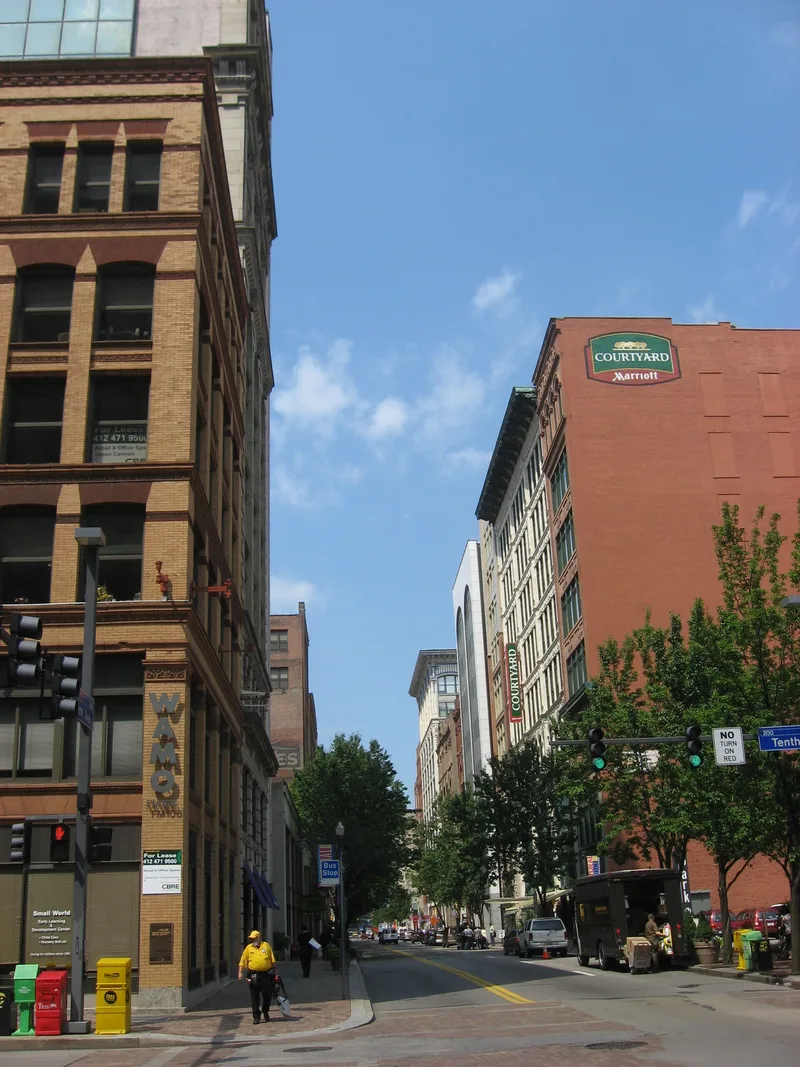
Along Penn and Liberty avenues in downtown Pittsburgh stands a dense group of loft and commercial buildings, most four to ten stories tall, built between the 1870s and about 1930. Their cast iron fronts, Queen Anne brick and stone ornament, rock-faced Richardsonian Romanesque facades and classical terra cotta work show how local commercial architecture changed over six decades. Architects Charles Bickel and James Steen designed several of the buildings, including the Ewart and Maginn buildings of 1891 and 1892 on Liberty Avenue. Narrow lots extend from the street to rear alleys such as Exchange Way and Garrison Place, which gave service access. The district records Pittsburgh's postwar role as a regional distribution center, served by rail lines and the rivers, and its specialization in housewares and furnishing businesses at the end of the nineteenth century. Most buildings retain their upper-floor integrity, although many street-level shopfronts have been modified.
Machine-generated summary. This summary was generated by a language model from the official nomination document and has not been reviewed line by line by an editor. It may contain errors. Check the source document before relying on any detail. Source: nomination document (PDF). Generated October 2026 (model claude-haiku-5-5, prompt v1.1-2026-10-29).
| Period of significance | 1870-1930 |
|---|---|
| Styles | Italianate, Queen Anne, Richardsonian Romanesque, Classical Revival |
| Areas of significance | Commerce, Architecture |
| Acreage | 17 |
| Boundary source | NPS cultural-resource GIS polygon |
| Full listing page | Penn-Liberty Historic District (Boundary Increase) (property record) |
What listing means for this property
This is a historic district. Buildings within its boundary are either contributing (they add to the district's significance) or non-contributing. Owners of contributing income-producing buildings can claim the 20% federal rehabilitation tax credit; homeowners should look at state credits. National Register districts impose no design review by themselves; a local historic district ordinance, if one exists, does (the difference explained).
General information, not legal or tax advice. Rules change; confirm with your State Historic Preservation Office or a qualified adviser.