Oley Township Historic District

Why it's listed
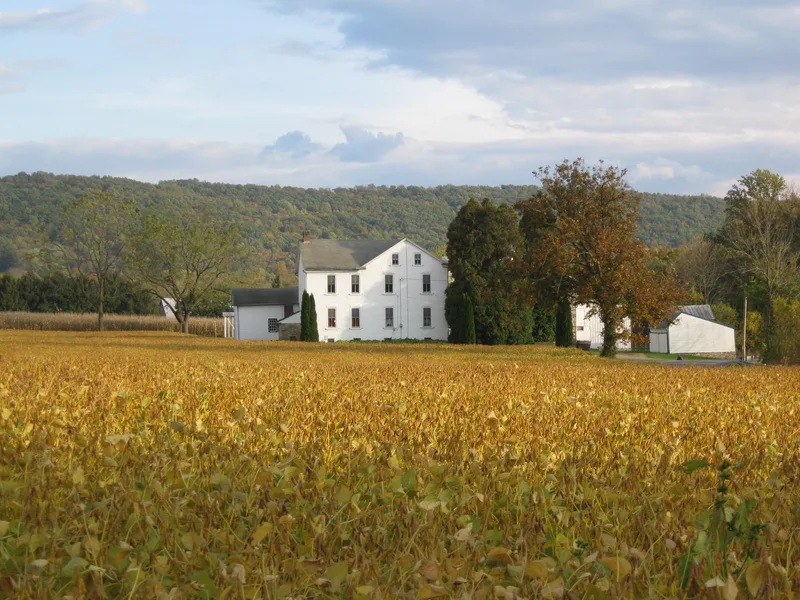
Oley Township covers about 15,065 acres of limestone farmland in the Oley Valley of Berks County, roughly ten miles east of Reading. It holds some 160 farmstead groupings, most with a house, barn and several outbuildings dating from 1740 to 1880, along with the village of Oley and five smaller settlements. The architecture is notable for its stone cabins, springhouses, and steep-roofed stone houses from 1740 to 1780, which the nomination describes as among the most concentrated examples of Germanic building in the country. The district also includes Georgian houses from the 1780s onward, stone barns, clay tile roofs of local Oley Valley design, and early iron-making settlements at Oley Forge and Oley Furnace. Religious sites such as the DeBenneville House, associated with early Universalist worship, and the DeTurk House, linked to the 1742 Moravian synod, add to its importance. Farm fields and historic roads connect the properties, which together show the landscape of rural Pennsylvania German life.
Machine-generated summary. This summary was generated by a language model from the official nomination document and has not been reviewed line by line by an editor. It may contain errors. Check the source document before relying on any detail. Source: nomination document (PDF) · catalog entry. Generated October 2026 (model claude-haiku-5-5, prompt v1.1-2026-10-29).
| Period of significance | 1712-1900 |
|---|---|
| Styles | Pennsylvania German vernacular; Germanic; Georgian; transitional; Victorian |
| Areas of significance | Industry, Agriculture, Architecture, Religion |
| Acreage | 15065 |
| Boundary source | NPS cultural-resource GIS polygon |
| Full listing page | Oley Township Historic District (property record) |
What listing means for this property
This is a historic district. Buildings within its boundary are either contributing (they add to the district's significance) or non-contributing. Owners of contributing income-producing buildings can claim the 20% federal rehabilitation tax credit; homeowners should look at state credits. National Register districts impose no design review by themselves; a local historic district ordinance, if one exists, does (the difference explained).
General information, not legal or tax advice. Rules change; confirm with your State Historic Preservation Office or a qualified adviser.