Gettysburg National Military Park

Why it's listed
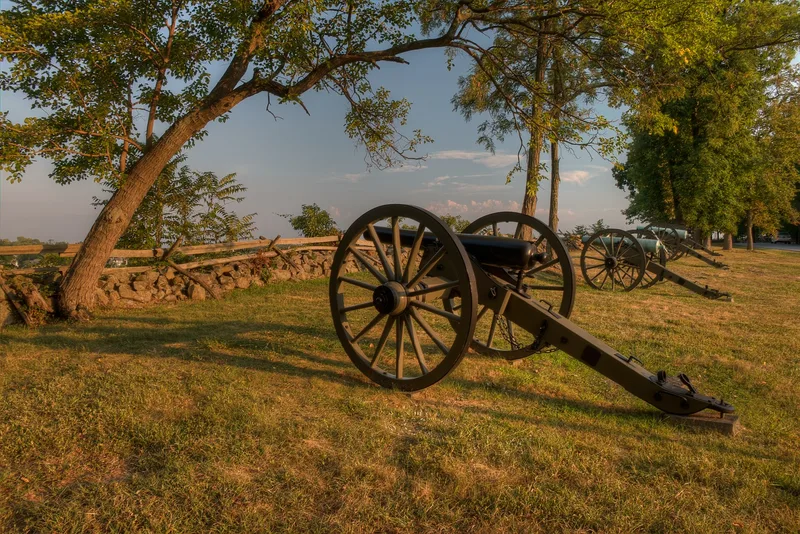
Gettysburg National Military Park covers the ground of the three-day battle fought on July 1-3, 1863, in and around the Pennsylvania town of Gettysburg. The park includes Little Round Top, Seminary Ridge, Cemetery Ridge, Cemetery Hill and Culp's Hill, along with farm fields, woodlots, orchards, and stone and rail fences that shaped the fighting. The Soldiers' National Cemetery was dedicated in November 1863, where Abraham Lincoln delivered the Gettysburg Address, and its design by William Saunders was largely complete by 1869. Veterans led preservation efforts from 1864, and the federal park was established in 1895 with monuments, formal avenues and designed landscape features. The park is regarded as a leading example of a designed commemorative battlefield, and its terrain is considered likely to yield further archaeological information about the battle.
Machine-generated summary. This summary was generated by a language model from the official nomination document and has not been reviewed line by line by an editor. It may contain errors. Check the source document before relying on any detail. Source: nomination document (PDF) · catalog entry. Generated October 2026 (model claude-haiku-5-5, prompt v1.1-2026-10-29).
| Period of significance | 1863-1938 |
|---|---|
| Styles | No Style |
| Areas of significance | Military, Politics/Government, Landscape Architecture, Conservation, Historic - Non-Aboriginal |
| Acreage | 5989 |
| Boundary source | NPS cultural-resource GIS polygon |
| Full listing page | Gettysburg National Military Park (property record) |
What listing means for this property
This is a historic district. Buildings within its boundary are either contributing (they add to the district's significance) or non-contributing. Owners of contributing income-producing buildings can claim the 20% federal rehabilitation tax credit; homeowners should look at state credits. National Register districts impose no design review by themselves; a local historic district ordinance, if one exists, does (the difference explained).
General information, not legal or tax advice. Rules change; confirm with your State Historic Preservation Office or a qualified adviser.