Easton Historic District

Why it's listed
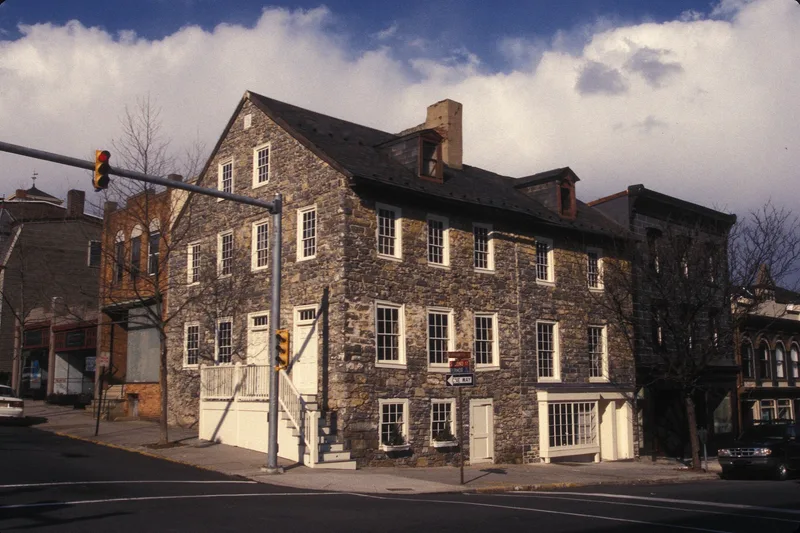
Easton's historic district lies on a peninsula where the Lehigh and Delaware Rivers meet, in Northampton County. Its buildings range from colonial-era stone houses to Art Deco structures, though most date from 1830 to 1910, when three canals and five railroads made the town prosperous. William Parsons and Nicholas Scull laid out the town in 1752 for Thomas Penn, and Parsons built a stone house there by 1757. Easton hosted Indian Treaty Councils between 1756 and 1758, and its tavern and Center Square were central to those meetings. During the Revolutionary War it served as a supply depot and as the starting point of General Sullivan's 1779 campaign. The district contains forty-three buildings regarded as significant, including the Easton House Tavern, the Mixsell House, and the Herman Simon House. Brick is the most common material, and the Spring Garden and North Third Street blocks retain much of their nineteenth-century appearance.
Machine-generated summary. This summary was generated by a language model from the official nomination document and has not been reviewed line by line by an editor. It may contain errors. Check the source document before relying on any detail. Source: nomination document (PDF) · catalog entry. Generated October 2026 (model claude-haiku-5-5, prompt v1.1-2026-10-29).
| Period of significance | 1752-1930 |
|---|---|
| Styles | Colonial, Federal, Eclectic and Revival, Beaux Arts, Art Deco, and Victorian |
| Areas of significance | Commerce, Politics/Government, Architecture |
| Acreage | 107 |
| Boundary source | NPS cultural-resource GIS polygon |
| Full listing page | Easton Historic District (property record) |
What listing means for this property
This is a historic district. Buildings within its boundary are either contributing (they add to the district's significance) or non-contributing. Owners of contributing income-producing buildings can claim the 20% federal rehabilitation tax credit; homeowners should look at state credits. National Register districts impose no design review by themselves; a local historic district ordinance, if one exists, does (the difference explained).
General information, not legal or tax advice. Rules change; confirm with your State Historic Preservation Office or a qualified adviser.