Allegheny West Historic District

Why it's listed
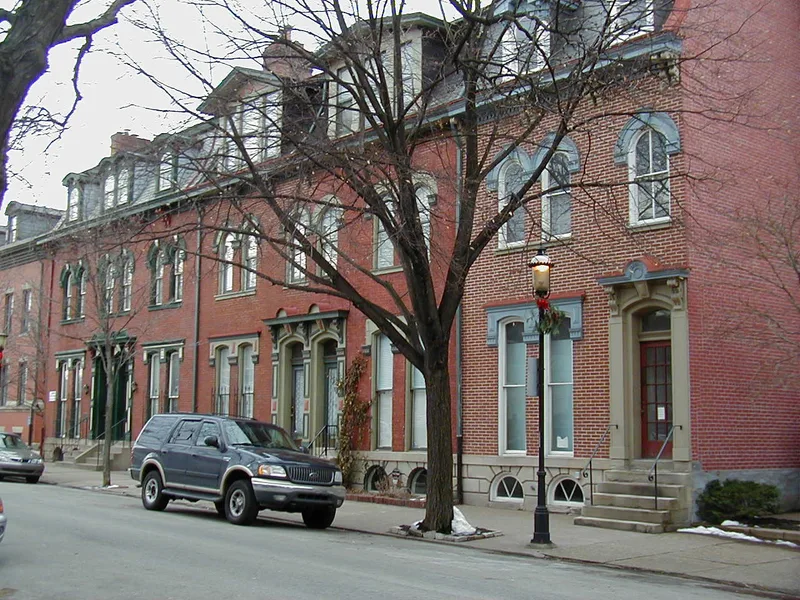
Located on Pittsburgh's North Side beside Allegheny Commons, this residential district grew up after the middle of the nineteenth century, when streets were laid out and filled with houses of many types, including detached villas, row houses and large double houses. Ridge Avenue was the most fashionable street, favored by iron and steel fortunes of the late nineteenth century. Its surviving houses include the Byers-Lyons House, the William Penn Snyder House and the John Moorhead Jr. House, and Memorial Hall, once a dormitory of the Western Theological Seminary. Calvary Methodist Church, built in 1892-93, is among the largest institutional buildings in the district. Emmanuel Episcopal Church, designed by Henry Hobson Richardson in 1885-86, stands at North and Allegheny Avenues. The area also has a long history before settlement, since an Indian trail crossed it that was later used by early Western Pennsylvania figures. The district is valued for its housing and churches from the later nineteenth and early twentieth centuries.
Machine-generated summary. This summary was generated by a language model from the official nomination document and has not been reviewed line by line by an editor. It may contain errors. Check the source document before relying on any detail. Source: nomination document (PDF) · catalog entry. Generated October 2026 (model claude-haiku-5-5, prompt v1.1-2026-10-29).
| Period of significance | 1900- |
|---|---|
| Styles | Italianate, Gothic, Romanesque, Tudor and Classical |
| Areas of significance | Industry, Architecture |
| Acreage | 43 |
| Boundary source | NPS cultural-resource GIS polygon |
| Full listing page | Allegheny West Historic District (property record) |
What listing means for this property
This is a historic district. Buildings within its boundary are either contributing (they add to the district's significance) or non-contributing. Owners of contributing income-producing buildings can claim the 20% federal rehabilitation tax credit; homeowners should look at state credits. National Register districts impose no design review by themselves; a local historic district ordinance, if one exists, does (the difference explained).
General information, not legal or tax advice. Rules change; confirm with your State Historic Preservation Office or a qualified adviser.