Village Historic District

Why it's listed
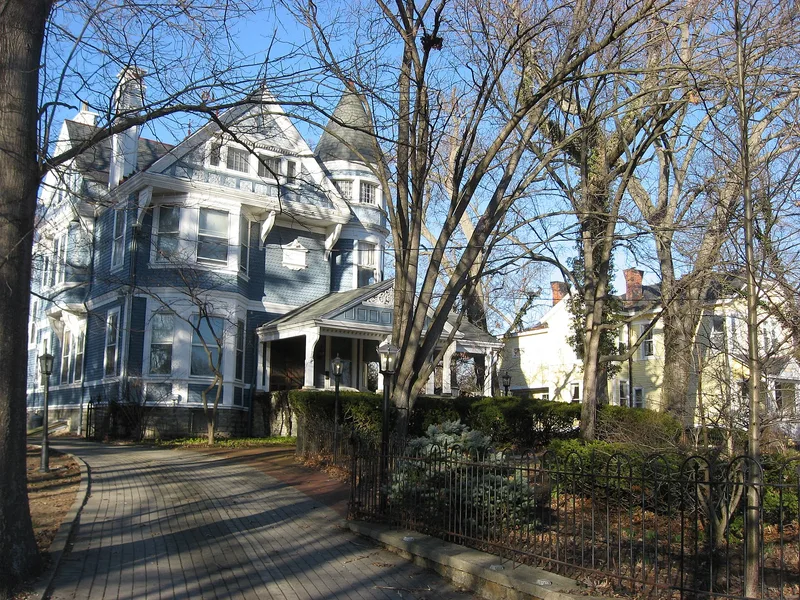
The Village Historic District is a residential and civic neighborhood in Wyoming, Hamilton County, Ohio, listed in 1986 as part of a multiple resource nomination for the community. Its boundary follows whole lot lines and runs along streets including Springfield Pike, Wentworth Avenue, Burns Avenue, Grove Avenue, Oak Avenue, Water Street, Van Roberts Street and East Mills Avenue. Maps of the area show churches, a library, schools, a civic center and parks among the houses. A federal reviewer described the district as a good illustration of the development of a late 19th and early 20th century commuter suburb and recommended its acceptance under criteria A, B and C. The nomination was accepted and entered in the National Register in August 1986. The text supplied here contains mainly boundary descriptions, maps and review sheets, so details of individual buildings, architects and styles are not available.
Machine-generated summary. This summary was generated by a language model from the official nomination document and has not been reviewed line by line by an editor. It may contain errors. Check the source document before relying on any detail. Source: nomination document (PDF) · catalog entry. Generated October 2026 (model claude-sonnet-5-5, prompt v1.0-2026-10-29).
| Areas of significance | Industry, Community Planning and Development, Architecture |
|---|---|
| Acreage | 178 |
| Boundary source | NPS cultural-resource GIS polygon |
| Full listing page | Village Historic District (property record) |
What listing means for this property
This is a historic district. Buildings within its boundary are either contributing (they add to the district's significance) or non-contributing. Owners of contributing income-producing buildings can claim the 20% federal rehabilitation tax credit; homeowners should look at state credits. National Register districts impose no design review by themselves; a local historic district ordinance, if one exists, does (the difference explained).
General information, not legal or tax advice. Rules change; confirm with your State Historic Preservation Office or a qualified adviser.