Rockefeller Park and Cleveland Cultural Gardens Historic District

Why it's listed
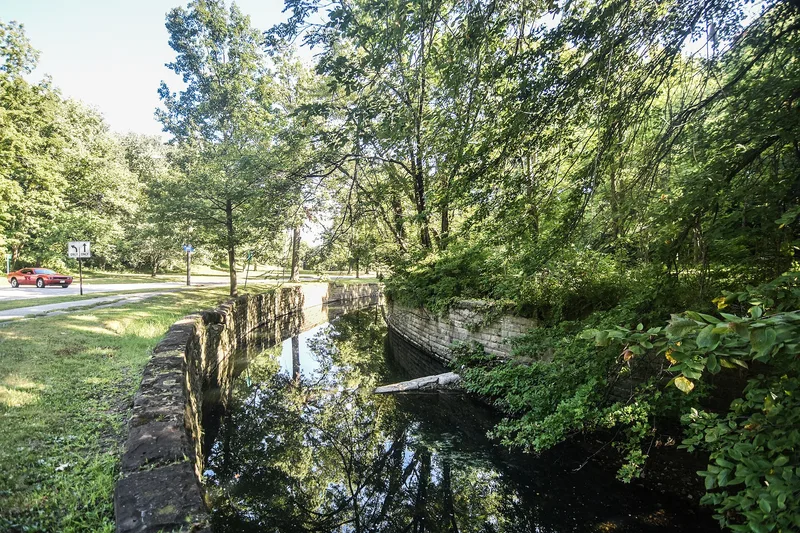
Rockefeller Park is a long urban park in Cleveland's Doan Brook valley, laid out from 1894 in the Victorian Picturesque style. A winding drive, now Martin Luther King Jr. Drive, runs beside the brook beneath stone-veneered bridges that carry Wade Park, Superior and St. Clair Avenues. The park also has stone walls along the brook, a lagoon, rock outcroppings, lawns and groves of hardwood trees, plus a 1930s greenhouse complex at the north end. Between Superior and St. Clair Avenues lie the Cleveland Cultural Gardens, built mainly between 1916 and 1941. Each garden has its own design reflecting an ethnic group, using terraces, walls, plantings and sculpture. They were created to promote ethnic pride, international cooperation and world peace. The district was listed for its park landscape and its commemoration of cultural diversity. Although sculpture has been lost, plantings have changed and some walls were replaced, the original layout and the dominant stonework from 1894 to 1954 remain.
Machine-generated summary. This summary was generated by a language model from the official nomination document and has not been reviewed line by line by an editor. It may contain errors. Check the source document before relying on any detail. Source: nomination document (PDF) · catalog entry. Generated October 2026 (model claude-sonnet-5-5, prompt v1.0-2026-10-29).
| Period of significance | 1894-1954 |
|---|---|
| Styles | Victorian Picturesque/American Romantic; Neoclassical Revival; Art Deco |
| Areas of significance | Entertainment/Recreation, Community Planning and Development, Other-Ethnic, Landscape Architecture, Art |
| Acreage | 206 |
| Boundary source | NPS cultural-resource GIS polygon |
| Full listing page | Rockefeller Park and Cleveland Cultural Gardens Historic District (property record) |
What listing means for this property
This is a historic district. Buildings within its boundary are either contributing (they add to the district's significance) or non-contributing. Owners of contributing income-producing buildings can claim the 20% federal rehabilitation tax credit; homeowners should look at state credits. National Register districts impose no design review by themselves; a local historic district ordinance, if one exists, does (the difference explained).
General information, not legal or tax advice. Rules change; confirm with your State Historic Preservation Office or a qualified adviser.