Gilbert-Sinton Historic District

Why it's listed
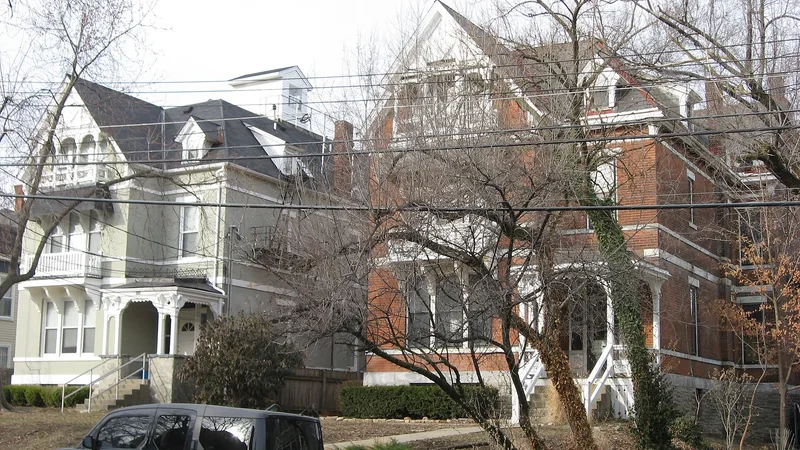
Gilbert-Sinton Historic District is a triangular neighborhood northeast of downtown Cincinnati, just north of Eden Park. Gilbert Avenue, Sinton Avenue and Morris Street form its edges. It contains 53 buildings, mostly residential, built between the 1880s and the early twentieth century. Stone-faced buildings dominate the south, brick buildings with stone and metal trim line Sinton Avenue, and frame houses with decorative shingles fill the north. These groupings reflect different developers at work. Thomas Emery's Sons built in three phases, with Joseph Steinkamp presumed to be the architect. Charles Dickson developed most of Morris Street, and James Sibley leased houses on Deerfield Place to working-class tenants who could buy them after three years. Cable and electric streetcar lines up the hill encouraged growth. Building types range from flats and duplexes to single-family houses and large rowhouses, many with shared corbelled chimneys and similar porches. Some buildings have been rehabilitated, while others are neglected or demolished.
Machine-generated summary. This summary was generated by a language model from the official nomination document and has not been reviewed line by line by an editor. It may contain errors. Check the source document before relying on any detail. Source: nomination document (PDF) · catalog entry. Generated October 2026 (model claude-sonnet-5-5, prompt v1.0-2026-10-29).
| Styles | Queen Anne and Shingle Style |
|---|---|
| Areas of significance | Community Planning and Development, Transportation, Architecture |
| Acreage | 13.2 |
| Boundary source | NPS cultural-resource GIS polygon |
| Full listing page | Gilbert-Sinton Historic District (property record) |
What listing means for this property
This is a historic district. Buildings within its boundary are either contributing (they add to the district's significance) or non-contributing. Owners of contributing income-producing buildings can claim the 20% federal rehabilitation tax credit; homeowners should look at state credits. National Register districts impose no design review by themselves; a local historic district ordinance, if one exists, does (the difference explained).
General information, not legal or tax advice. Rules change; confirm with your State Historic Preservation Office or a qualified adviser.