Hillsborough Historic District

Why it's listed
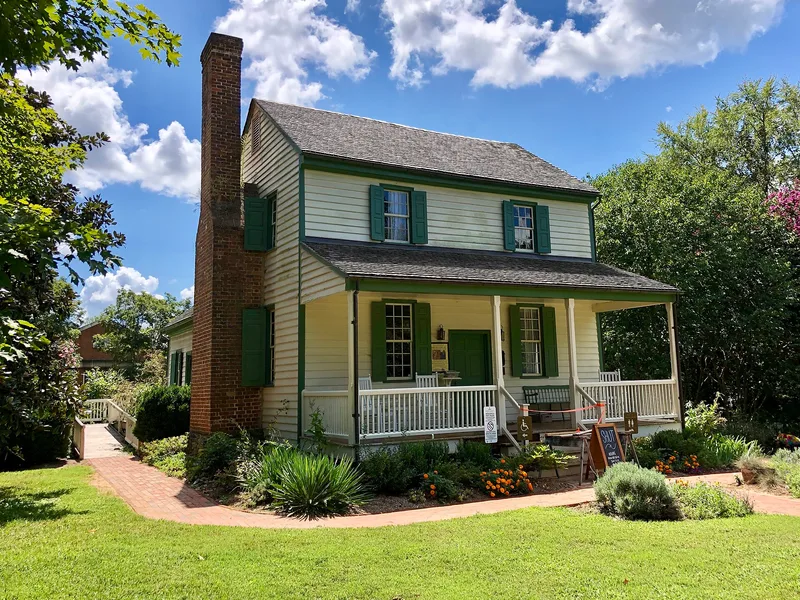
Hillsborough is a small town on the Eno River in Orange County, North Carolina, whose historic district preserves an eighteenth century street grid begun in 1766 and a semi-rural townscape. Many lots were treated almost like small plantations, with a house and its outbuildings set in open space. The district includes the Old Orange County Courthouse, a brick temple-form building with a Greek Doric portico designed and built in 1844-1845 by Captain John Berry, as well as churches, frame and brick dwellings, small law offices, kitchens and gardens. Most houses follow traditional forms and a restrained early Federal style, and many were expanded gradually over time. The district matters because Hillsborough was a political center of back country North Carolina, a focus of the Regulator movement, active during the Revolution, and the site of the 1788 Constitutional Convention. Its buildings reflect the practical character of the farmers, merchants and lawyers who shaped the town.
Machine-generated summary. This summary was generated by a language model from the official nomination document and has not been reviewed line by line by an editor. It may contain errors. Check the source document before relying on any detail. Source: nomination document (PDF) · catalog entry. Generated October 2026 (model claude-sonnet-5-5, prompt v1.0-2026-10-29).
| Styles | Predominantly vernacular early Federal, with Greek Revival, Gothic Revival, Italianate, Victorian and Neoclassical Revival examples |
|---|---|
| Areas of significance | Historic - Aboriginal, Commerce, Agriculture, Military, Education, Science, Politics/Government, Architecture, Religion, Black |
| Acreage | 1265 |
| Boundary source | NPS cultural-resource GIS polygon |
| Full listing page | Hillsborough Historic District (property record) |
What listing means for this property
This is a historic district. Buildings within its boundary are either contributing (they add to the district's significance) or non-contributing. Owners of contributing income-producing buildings can claim the 20% federal rehabilitation tax credit; homeowners should look at state credits. National Register districts impose no design review by themselves; a local historic district ordinance, if one exists, does (the difference explained).
General information, not legal or tax advice. Rules change; confirm with your State Historic Preservation Office or a qualified adviser.