Hillsborough Historic District
Also known as: 31 Or 11; 31 Or 231; See Also:Burwell School; Eagle Lodge; Heart
Hillsborough Historic District is a historic district in Hillsborough, Orange County, North Carolina, listed on the National Register of Historic Places on October 15, 1973 (reference number 73001363). The National Park Service records its significance in Historic - Aboriginal, Commerce, Agriculture, Military, Education, Science, Politics/Government, Architecture, Religion and Black at the state and local levels.
Facts from the NPS National Register database (); nomination summary October 2026. Last updated . Sources for each fact.

The pin is a point inside the NPS boundary polygon, not a surveyed location.
Why it's listed
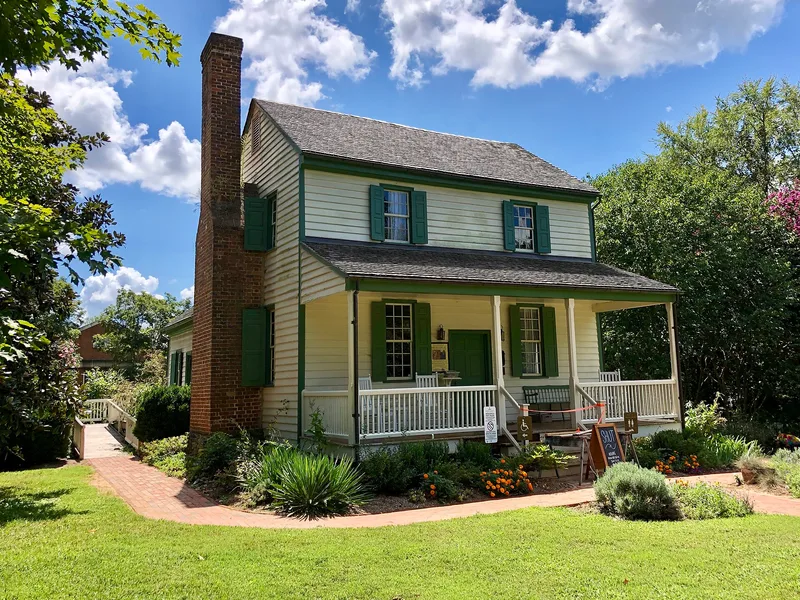
Hillsborough is a small town on the Eno River in Orange County, North Carolina, whose historic district preserves an eighteenth century street grid begun in 1766 and a semi-rural townscape. Many lots were treated almost like small plantations, with a house and its outbuildings set in open space. The district includes the Old Orange County Courthouse, a brick temple-form building with a Greek Doric portico designed and built in 1844-1845 by Captain John Berry, as well as churches, frame and brick dwellings, small law offices, kitchens and gardens. Most houses follow traditional forms and a restrained early Federal style, and many were expanded gradually over time. The district matters because Hillsborough was a political center of back country North Carolina, a focus of the Regulator movement, active during the Revolution, and the site of the 1788 Constitutional Convention. Its buildings reflect the practical character of the farmers, merchants and lawyers who shaped the town.
Significance in brief: Hillsborough was an important political center of back country North Carolina, a center of Regulator activity, active in the Revolution, and the site of the 1788 Constitutional Convention. Its conservative, solidly built public and domestic buildings reflect the practical farmers, merchants and lawyers who shaped the town. The surviving street plan, semi-rural townscape, and many small law offices and dependencies keep a consistent scale and a sense of the past.
Machine-generated summary. This summary was generated by a language model from the official nomination document and has not been reviewed line by line by an editor. It may contain errors. Check the source document before relying on any detail. Source: nomination document (PDF) · National Archives catalog entry. NRHP reference 73001363, listed October 15, 1973. Summary generated October 2026 (model claude-sonnet-5-5, prompt v1.0-2026-10-29, confidence medium).
Key facts
| Official database NPS National Register database, ref. 73001363 , checked | |
|---|---|
| Address | Roughly bounded by N. Nash and W. Corbin Sts., Highland Loop Rd., and Eno River, Hillsborough |
| County | Orange County |
| Listed | October 15, 1973 |
| Reference number | 73001363 |
| Resource type | District |
| Areas of significance | Historic - Aboriginal, Commerce, Agriculture, Military, Education, Science, Politics/Government, Architecture, Religion, Black |
| Level of significance | State, Local |
| National Historic Landmark | No |
| Acreage | 1265 |
| Official document, machine-extracted Nomination form (National Archives) , checked | |
| Architect / builder | Captain John Berry (courthouse, Methodist Church, other works); William Nichols (Eagle Lodge); William Percival (First Baptist Church); Ralph Adams Cram (Shepperd Strudwick House) |
| Architectural style | Predominantly vernacular early Federal, with Greek Revival, Gothic Revival, Italianate, Victorian and Neoclassical Revival examples |
| Status (as stated in the nomination) | Condition marked excellent, good and fair; the district includes occupied buildings in residential, commercial, government, religious, educational and museum use. |
| Official dataset NPS cultural-resource GIS (NRHP locations) | |
| Coordinates | 36.07232, -79.09639 |
What listing means for this property
This is a historic district. Buildings within its boundary are either contributing (they add to the district's significance) or non-contributing. Owners of contributing income-producing buildings can claim the 20% federal rehabilitation tax credit; homeowners should look at state credits. National Register districts impose no design review by themselves; a local historic district ordinance, if one exists, does (the difference explained).
General information, not legal or tax advice. Rules change; confirm with your State Historic Preservation Office or a qualified adviser.
Questions about Hillsborough Historic District
When was Hillsborough Historic District added to the National Register of Historic Places?
Hillsborough Historic District was listed on October 15, 1973. Its National Register reference number is 73001363.
Is Hillsborough Historic District a National Historic Landmark?
No. The National Park Service database (snapshot of May 2026) lists Hillsborough Historic District on the National Register but does not record it as a National Historic Landmark.
Where is Hillsborough Historic District?
Roughly bounded by N. Nash and W. Corbin Sts., Highland Loop Rd., and Eno River, Hillsborough, Orange County, North Carolina; coordinates 36.07232, -79.09639.
Why is Hillsborough Historic District historically significant?
According to a machine-generated summary of its nomination form: Hillsborough was an important political center of back country North Carolina, a center of Regulator activity, active in the Revolution, and the site of the 1788 Constitutional Convention. Its conservative, solidly built public and domestic buildings reflect the practical farmers, merchants and lawyers who shaped the town. The surviving street plan, semi-rural townscape, and many small law offices and dependencies keep a consistent scale and a sense of the past. Check the nomination document before relying on any detail.
Who designed or built Hillsborough Historic District?
The nomination form names Captain John Berry (courthouse, Methodist Church, other works); William Nichols (Eagle Lodge); William Percival (First Baptist Church); Ralph Adams Cram (Shepperd Strudwick House) as architect or builder (extracted by machine from the nomination; check the source document).
Where can I read the original nomination for Hillsborough Historic District?
The nomination form is a public record held by the National Archives: nomination document (PDF).
Sources and further reading
- National Park Service, National Register of Historic Places database (snapshot May 2026), reference 73001363.
- Nomination form (PDF, National Archives) — catalog entry
- Wikipedia article (used for cross-checking only; text not reproduced here)
- Wikidata Q5763702
- This listing as JSON
Last updated November 2026. Found an error? See the editorial policy for how to report it.