Claremont High School Historic District

Why it's listed
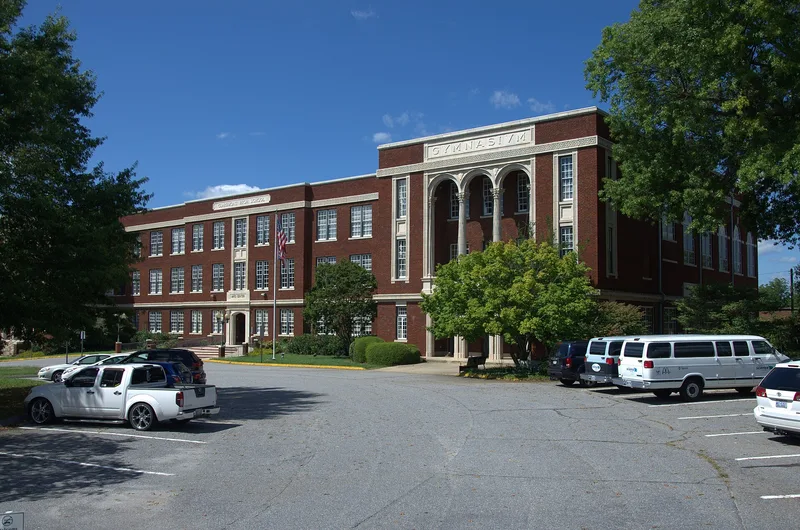
Northeast of downtown Hickory, this fifty-acre neighborhood centers on Claremont High School and spreads along Third, Fourth and Fifth Avenues, parts of Second Avenue and North Center Street, and Carolina Park. Sixty-two buildings show how the city grew from a small town in the late nineteenth century into a manufacturing center. The oldest notable building is an 1875 Italianate farmhouse at the northern edge. The 1887 Shuler-Harper house is described as the finest surviving Queen Anne building in Hickory, with Eastlake interior detail. Later houses move through Colonial Revival, including the square-house type, then bungalows and Tudor Revival designs. Residents ranged from bankers, lawyers and doctors to farmers and ticket agents. Brick became the dominant material after 1923. The school site recalls Claremont Female College, which occupied a Second Empire building there from 1883. Carolina Park, bought by the city in 1904, was long known for its mineral spring.
Machine-generated summary. This summary was generated by a language model from the official nomination document and has not been reviewed line by line by an editor. It may contain errors. Check the source document before relying on any detail. Source: nomination document (PDF) · catalog entry. Generated October 2026 (model claude-sonnet-5-5, prompt v1.0-2026-10-29).
| Styles | Queen Anne, Colonial Revival, Italianate, Neo-Classical, Bungalow/Craftsman, Tudor Revival |
|---|---|
| Areas of significance | Architecture |
| Acreage | 50 |
| Boundary source | NPS cultural-resource GIS polygon |
| Full listing page | Claremont High School Historic District (property record) |
What listing means for this property
This is a historic district. Buildings within its boundary are either contributing (they add to the district's significance) or non-contributing. Owners of contributing income-producing buildings can claim the 20% federal rehabilitation tax credit; homeowners should look at state credits. National Register districts impose no design review by themselves; a local historic district ordinance, if one exists, does (the difference explained).
General information, not legal or tax advice. Rules change; confirm with your State Historic Preservation Office or a qualified adviser.