South Street Seaport Historic District

Why it's listed
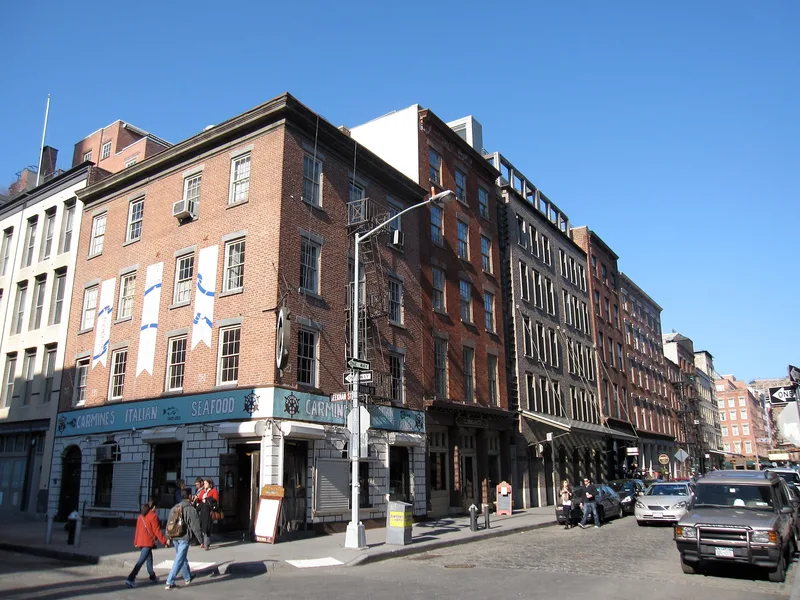
This seven-and-a-half-block area of lower Manhattan, with two piers on the East River, extends the South Street Seaport district to its final boundaries. Pearl Street marks the western edge because all land to the east was created by landfill between the late 17th and early 19th centuries. The Brooklyn Bridge bounds it on the north. Buildings are mostly three to six stories of brick, with earlier walls in handmade brick laid in Flemish bond and later ones in machine-made brick. Greek Revival granite store fronts and cast-iron fronts survive. Notable sites include the Captain Joseph Rose House at 273 Water Street, built about 1773 and called the oldest commercial structure in the city, though fire left only parts of its facade. A wooden building at Dover and Water Streets is the last wooden frame structure south of Canal Street. The sealed landfill deposits also give the area archeological importance.
Machine-generated summary. This summary was generated by a language model from the official nomination document and has not been reviewed line by line by an editor. It may contain errors. Check the source document before relying on any detail. Source: nomination document (PDF) · catalog entry. Generated October 2026 (model claude-sonnet-5-5, prompt v1.0-2026-10-29).
| Styles | Greek Revival store fronts, later nineteenth-century cast-iron fronts, and Romanesque Revival |
|---|---|
| Areas of significance | Commerce, Historic - Non-Aboriginal, Architecture |
| Acreage | 41 |
| Boundary source | NPS cultural-resource GIS polygon |
| Full listing page | South Street Seaport Historic District (property record) |
What listing means for this property
This is a historic district. Buildings within its boundary are either contributing (they add to the district's significance) or non-contributing. Owners of contributing income-producing buildings can claim the 20% federal rehabilitation tax credit; homeowners should look at state credits. National Register districts impose no design review by themselves; a local historic district ordinance, if one exists, does (the difference explained).
General information, not legal or tax advice. Rules change; confirm with your State Historic Preservation Office or a qualified adviser.