LETTIE G. HOWARD (schooner)
Also known as: Mystic C.; Caviare
LETTIE G. HOWARD (schooner) is a structure in New York, Manhattan, New York, listed on the National Register of Historic Places on September 7, 1984 (reference number 84002779). It is also a National Historic Landmark, designated April 11, 1989. The National Park Service records its significance in Industry, Commerce, Architecture and Maritime History at the national and local levels.
Facts from the NPS National Register database (); nomination summary October 2026. Last updated . Sources for each fact.

Approximate location: the National Park Service places this pin arbitrarily within the property, not at a surveyed point.
Why it's listed
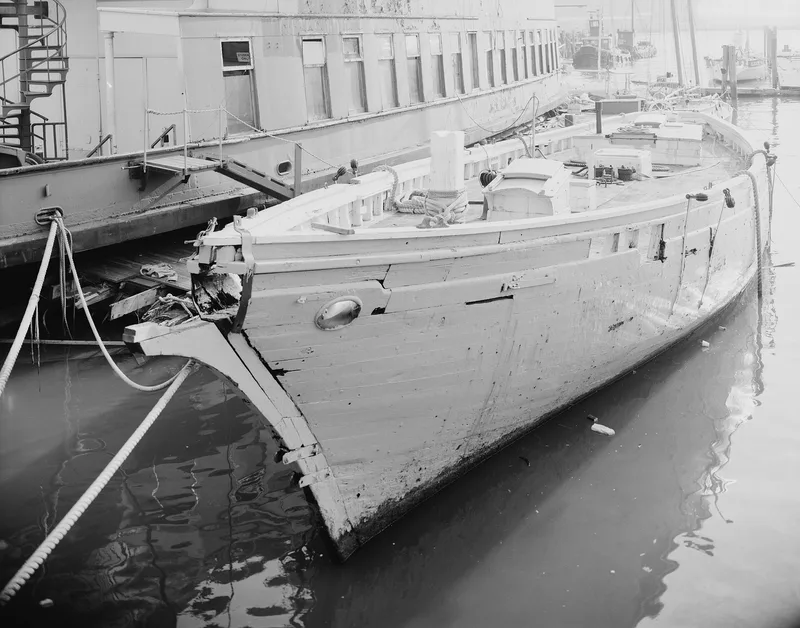
Lettie G. Howard is a wooden fishing schooner built in 1893 by Arthur D. Story at Essex, Massachusetts. About 75 feet long, she was constructed of pine planking over oak frames to the Fredonia model, a fast, capacious design that became the most common type in New England and Gulf of Mexico fisheries during the 1890s. She fished with dories on the Grand Banks until 1901, then was sold to Pensacola, Florida, owners who used her for red snapper fishing off Yucatan. Rebuilt in 1923 and renamed Mystic C., she received an engine in 1924 and later lost her topmasts and bowsprit. Sold in 1966 for use as a museum ship, she was restored, and South Street Seaport Museum returned her original name in 1972. She sailed until 1980, when dry rot ended her sailing career. A shiphouse now protects her decks. She is described as the last surviving Fredonia-model schooner.
Significance in brief: The nomination presents her as the last remaining example of the Fredonia model, once the standard design for large American offshore fishing vessels. She is also tied to the New England dory fishery and the later Gulf of Mexico red snapper fishery. Her history covers the schooner's rebuilding in 1923 and her museum preservation from 1966 onward.
Machine-generated summary. This summary was generated by a language model from the official nomination document and has not been reviewed line by line by an editor. It may contain errors. Check the source document before relying on any detail. Source: nomination document (PDF) · National Archives catalog entry. NRHP reference 84002779, listed September 7, 1984. Summary generated October 2026 (model claude-sonnet-5-5, prompt v1.0-2026-10-29, confidence high).
Key facts
| Official database NPS National Register database, ref. 84002779 , checked | |
|---|---|
| Address | South Street Seaport Museum, New York |
| County | Manhattan |
| Listed | September 7, 1984 |
| Reference number | 84002779 |
| Resource type | Structure |
| Areas of significance | Industry, Commerce, Architecture, Maritime History |
| Level of significance | National, Local |
| National Historic Landmark | Yes, designated April 11, 1989 |
| Acreage | 0.9 |
| Official document, machine-extracted Nomination form (National Archives) , checked | |
| Period of significance | 1893-1966 |
| Architect / builder | Arthur D. Story |
| Architectural style | Fredonia model fishing schooner (Architecture, Naval) |
| Status (as stated in the nomination) | Static museum vessel since 1980 because of extensive dry rot; masts removed and a protective shiphouse built over the decks while awaiting further restoration. |
| Official dataset NPS cultural-resource GIS (NRHP locations) | |
| Coordinates | 40.70505, -74.00201 |
| Computed Computed from NPS GIS district boundaries | |
| Within district | South Street Seaport |
What listing means for this property
National Register listing is honorary: it recognises significance and does not restrict what a private owner may do without federal money or permits. It unlocks the 20% federal rehabilitation tax credit for income-producing buildings, state credits in many states, and Section 106 review when federal agencies are involved. See what listing means in practice.
General information, not legal or tax advice. Rules change; confirm with your State Historic Preservation Office or a qualified adviser.
Questions about LETTIE G. HOWARD (schooner)
When was LETTIE G. HOWARD (schooner) added to the National Register of Historic Places?
LETTIE G. HOWARD (schooner) was listed on September 7, 1984. Its National Register reference number is 84002779.
Is LETTIE G. HOWARD (schooner) a National Historic Landmark?
Yes. LETTIE G. HOWARD (schooner) is a National Historic Landmark, designated April 11, 1989, in addition to being listed on the National Register.
Where is LETTIE G. HOWARD (schooner)?
South Street Seaport Museum, New York, Manhattan, New York; coordinates 40.70505, -74.00201.
Why is LETTIE G. HOWARD (schooner) historically significant?
According to a machine-generated summary of its nomination form: The nomination presents her as the last remaining example of the Fredonia model, once the standard design for large American offshore fishing vessels. She is also tied to the New England dory fishery and the later Gulf of Mexico red snapper fishery. Her history covers the schooner's rebuilding in 1923 and her museum preservation from 1966 onward. Check the nomination document before relying on any detail.
Who designed or built LETTIE G. HOWARD (schooner)?
The nomination form names Arthur D. Story as architect or builder (extracted by machine from the nomination; check the source document).
Is LETTIE G. HOWARD (schooner) in a historic district?
Yes. Its location falls within the South Street Seaport, itself listed on the National Register. (Computed from National Park Service boundary data; the district nomination's own list of contributing resources may differ.)
Where can I read the original nomination for LETTIE G. HOWARD (schooner)?
The nomination form is a public record held by the National Archives: nomination document (PDF).
Sources and further reading
- National Park Service, National Register of Historic Places database (snapshot May 2026), reference 84002779.
- Nomination form (PDF, National Archives) — catalog entry
- Wikipedia article (used for cross-checking only; text not reproduced here)
- Wikidata Q3061189
- This listing as JSON
Last updated November 2026. Found an error? See the editorial policy for how to report it.