Owego Central Historic District (Boundary Increase)

Why it's listed
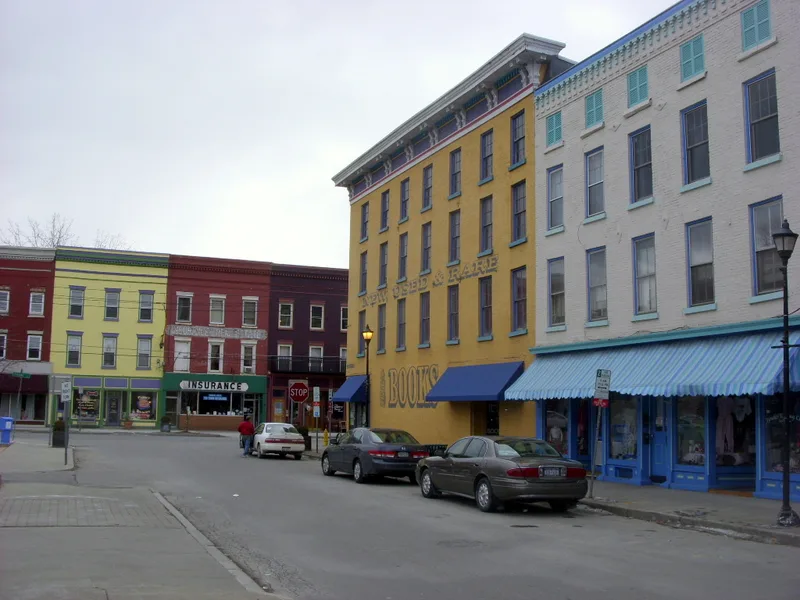
This 115-acre addition to Owego's central historic district takes in the residential neighborhoods immediately east and west of the original business core in Tioga County, New York. It contains 277 contributing primary buildings, a 1933 steel truss bridge, three parks and cemetery sites, and many outbuildings, carriage blocks, hitching posts, cast iron fences and stone sidewalks. Front Street holds many of the village's largest houses, including Federal, Greek Revival, Italianate, Second Empire and Queen Anne examples, and the Temple of the Winds style column is noted as a local hallmark. Armstrong Place is a 1920s subdivision of Bungalow and Craftsman houses, and side streets such as Paige and Ross have more modest dwellings. Churches, a school and a library are also included. The area was added because its development is closely tied to the commercial and civic center, and together they show village growth in the Southern Tier from about 1805 to 1947.
Machine-generated summary. This summary was generated by a language model from the official nomination document and has not been reviewed line by line by an editor. It may contain errors. Check the source document before relying on any detail. Source: nomination document (PDF) · catalog entry. Generated October 2026 (model claude-sonnet-5-5, prompt v1.0-2026-10-29).
| Period of significance | ca. 1805 to 1947 |
|---|---|
| Styles | Mixed (Eclectic), including Federal, Greek Revival, Gothic Revival, Italianate, Second Empire, Queen Anne, Stick, Shingle, Romanesque, Colonial Revival, Neoclassical, Bungalow/Craftsman and American Foursquare |
| Areas of significance | Architecture |
| Acreage | 115 |
| Boundary source | NPS cultural-resource GIS polygon |
| Full listing page | Owego Central Historic District (Boundary Increase) (property record) |
What listing means for this property
This is a historic district. Buildings within its boundary are either contributing (they add to the district's significance) or non-contributing. Owners of contributing income-producing buildings can claim the 20% federal rehabilitation tax credit; homeowners should look at state credits. National Register districts impose no design review by themselves; a local historic district ordinance, if one exists, does (the difference explained).
General information, not legal or tax advice. Rules change; confirm with your State Historic Preservation Office or a qualified adviser.