Montgomery-Grand-Liberty Streets Historic District

Why it's listed
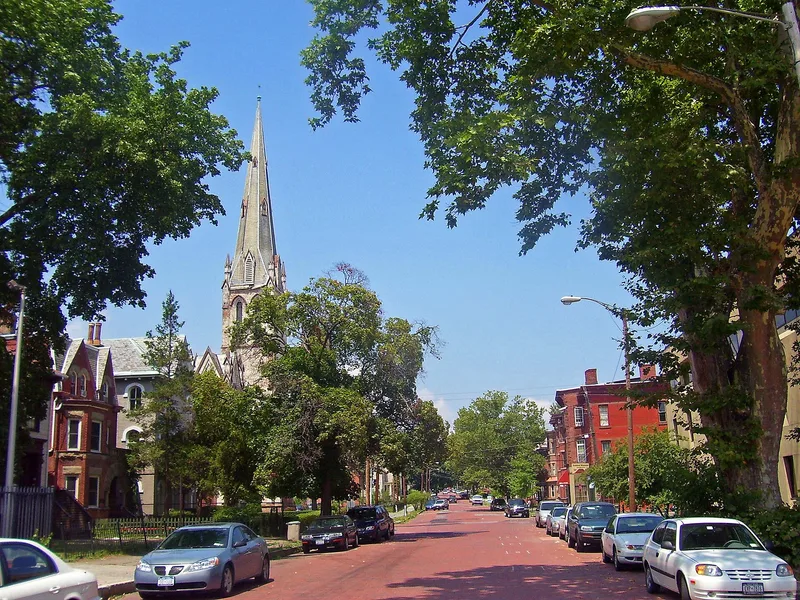
Montgomery, Grand and Liberty Streets form a residential district in Newburgh, New York, rising above the Hudson River. It holds roughly 250 structures, mostly two- and three-story brick houses from the nineteenth century, along with nine churches and several public buildings. Wealth from the town's river trade paid for much of the building, and prominent architects were drawn to work here. Andrew Jackson Downing and Calvert Vaux designed cottages and villas, some of which appeared in Vaux's book Villas and Cottages, including the Halsey Stevens House on Grand Street. Alexander Jackson Davis designed the 1835 Dutch Reformed Church, and Thornton Niven designed the 1842 courthouse. Other landmarks include the Tuscan Villa of about 1838, the 1829 David Crawford House, and the 1876 library by John Wood. After the Civil War, larger mansard-roofed houses were added. The district was recognized as an outstanding architectural collection shaped by new wealth and the work of influential designers.
Machine-generated summary. This summary was generated by a language model from the official nomination document and has not been reviewed line by line by an editor. It may contain errors. Check the source document before relying on any detail. Source: nomination document (PDF) · catalog entry. Generated October 2026 (model claude-sonnet-5-5, prompt v1.0-2026-10-29).
| Period of significance | 19th Century (20th Century also checked) |
|---|---|
| Styles | Mid-19th-century villas and cottages influenced by Downing and Vaux, with Gothic and Italianate elements, later mansard-roofed houses, and some row houses |
| Areas of significance | Architecture |
| Acreage | 101 |
| Boundary source | NPS cultural-resource GIS polygon |
| Full listing page | Montgomery-Grand-Liberty Streets Historic District (property record) |
What listing means for this property
This is a historic district. Buildings within its boundary are either contributing (they add to the district's significance) or non-contributing. Owners of contributing income-producing buildings can claim the 20% federal rehabilitation tax credit; homeowners should look at state credits. National Register districts impose no design review by themselves; a local historic district ordinance, if one exists, does (the difference explained).
General information, not legal or tax advice. Rules change; confirm with your State Historic Preservation Office or a qualified adviser.