Lower East Side Historic District

Why it's listed
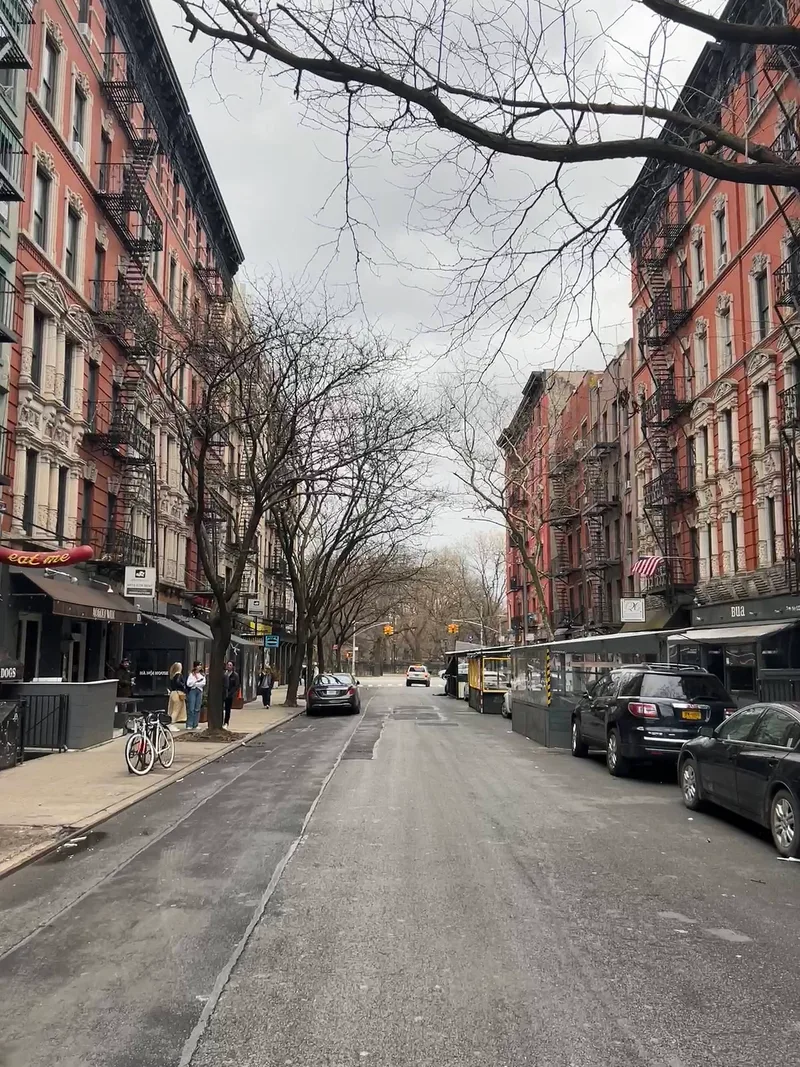
This section of Manhattan's Lower East Side covers 31 blocks bounded roughly by Houston Street, Essex Street, Allen Street, and Canal and Grand Streets. Its streets are lined mainly with five- to six-story brick tenements with shops at street level, alongside a few earlier Federal and Greek Revival rowhouses, synagogues, schools, a library, a dispensary and a firehouse. The area began as a middle-class neighborhood of single-family houses, became a center for German immigrants, and by the early twentieth century housed the world's largest Jewish community. The buildings show how tenement design changed over time, from pre-law structures with no light courts, to old-law dumbbell plans with small air shafts, to new-law buildings with larger courts. Styles include Italianate, Neo-Grec and Queen Anne. Rear yards contain archeological deposits that can reveal details about residents' ethnicity, wealth and consumer habits. It includes the Lower East Side Tenement Museum at 97 Orchard Street.
Machine-generated summary. This summary was generated by a language model from the official nomination document and has not been reviewed line by line by an editor. It may contain errors. Check the source document before relying on any detail. Source: nomination document (PDF) · catalog entry. Generated October 2026 (model claude-sonnet-5-5, prompt v1.0-2026-10-29).
| Styles | Federal, Greek Revival, Italianate, Neo-Grec, Queen Anne, Romanesque Revival, Beaux Arts, Italian Renaissance, Classical Revival, Moorish, Neo-Flemish, Art Deco |
|---|---|
| Areas of significance | Architecture, Ethnic Heritage, Social History, Commerce, Religion, Historic - Non-Aboriginal |
| Acreage | 62 |
| Boundary source | NPS cultural-resource GIS polygon |
| Full listing page | Lower East Side Historic District (property record) |
What listing means for this property
This is a historic district. Buildings within its boundary are either contributing (they add to the district's significance) or non-contributing. Owners of contributing income-producing buildings can claim the 20% federal rehabilitation tax credit; homeowners should look at state credits. National Register districts impose no design review by themselves; a local historic district ordinance, if one exists, does (the difference explained).
General information, not legal or tax advice. Rules change; confirm with your State Historic Preservation Office or a qualified adviser.