Grand Concourse Historic District

Why it's listed
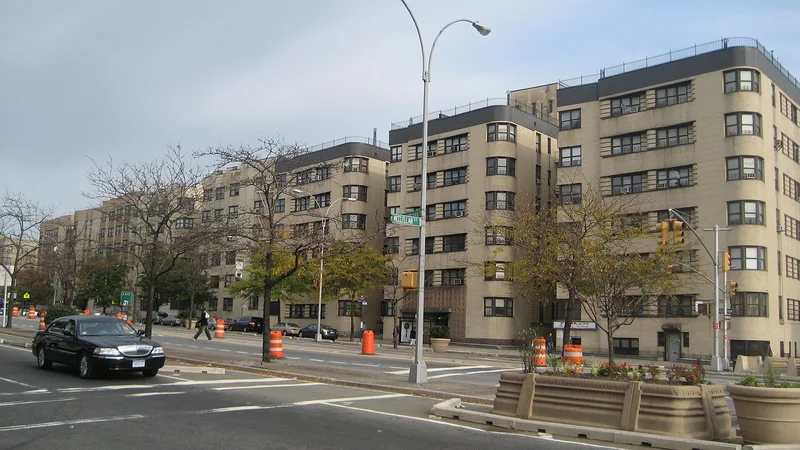
Running more than a mile along the Grand Concourse in the Bronx, this district takes in parts of thirty-six blocks and holds 83 contributing buildings plus one park. Most are apartment houses of five or six stories, built of brick with stone, cast-stone or terra-cotta trim, and set at the building line to form a continuous street wall. All contributing buildings date from 1916 to 1941. Early walkups are simple neo-Renaissance designs, while the 1920s brought Colonial Revival, neo-Tudor and Mediterranean examples such as the Concourse Plaza Hotel and Buckingham Manor. The 1930s and early 1940s produced buff-brick Art Deco buildings with corner windows, mosaics and terrazzo lobbies, including works by Emery Roth, Horace Ginsbern and Jacob Felson. Institutions such as the Andrew Freedman Home and the Bronx County Courthouse sit among them. Speculative builders developed the boulevard piecemeal as lots and financing became available, yet the scale, materials and ornament remain closely related, and many original lobbies survive.
Machine-generated summary. This summary was generated by a language model from the official nomination document and has not been reviewed line by line by an editor. It may contain errors. Check the source document before relying on any detail. Source: nomination document (PDF) · catalog entry. Generated October 2026 (model claude-sonnet-5-5, prompt v1.0-2026-10-29).
| Styles | Neo-Renaissance, Colonial Revival, neo-Tudor, Mediterranean, and Art Deco |
|---|---|
| Areas of significance | Architecture |
| Acreage | 50 |
| Boundary source | NPS cultural-resource GIS polygon |
| Full listing page | Grand Concourse Historic District (property record) |
What listing means for this property
This is a historic district. Buildings within its boundary are either contributing (they add to the district's significance) or non-contributing. Owners of contributing income-producing buildings can claim the 20% federal rehabilitation tax credit; homeowners should look at state credits. National Register districts impose no design review by themselves; a local historic district ordinance, if one exists, does (the difference explained).
General information, not legal or tax advice. Rules change; confirm with your State Historic Preservation Office or a qualified adviser.