Fulton-Nassau Historic District

Why it's listed
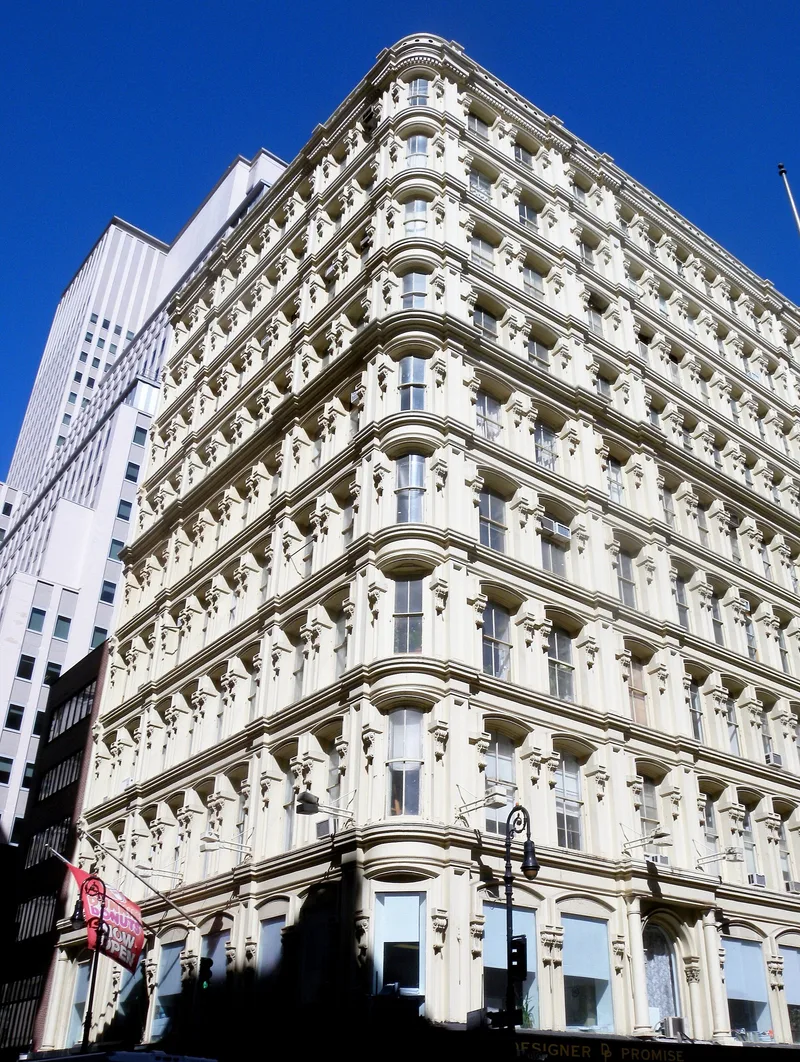
This commercial district in Lower Manhattan covers all or part of ten blocks north of Wall Street, centered on Fulton and Nassau streets. Its 75 contributing resources include early nineteenth-century brick counting houses, Italianate stone and cast-iron buildings, and a notable group of late nineteenth-century skyscrapers such as Temple Court, the Bennett Building, the Morse Building, the Potter Building and the New York Times Building. Taller office buildings followed the steel skeleton frame, and the last office building, built in 1939-40 for the Aetna Life Insurance Company, combines Art Deco and Modern elements. Streets laid out in the colonial era are irregular, producing unusual lot shapes and vistas. Low shops and restaurants stayed between the taller buildings because the streets carried heavy pedestrian traffic. Storefronts and ground-floor windows have been altered many times, yet the upper floors and overall street pattern remain largely intact. The district is listed for its record of the development of commercial architecture and the early skyscraper in Lower Manhattan.
Machine-generated summary. This summary was generated by a language model from the official nomination document and has not been reviewed line by line by an editor. It may contain errors. Check the source document before relying on any detail. Source: nomination document (PDF) · catalog entry. Generated October 2026 (model claude-sonnet-5-5, prompt v1.0-2026-10-29).
| Styles | Greek Revival, Italianate, Second Empire, Queen Anne, Romanesque, Renaissance, Beaux Arts, Classical Revival, Tudor Revival, Art Deco |
|---|---|
| Areas of significance | Architecture, Commerce, Industry, Community Planning and Development |
| Acreage | 13.5 |
| Boundary source | NPS cultural-resource GIS polygon |
| Full listing page | Fulton-Nassau Historic District (property record) |
What listing means for this property
This is a historic district. Buildings within its boundary are either contributing (they add to the district's significance) or non-contributing. Owners of contributing income-producing buildings can claim the 20% federal rehabilitation tax credit; homeowners should look at state credits. National Register districts impose no design review by themselves; a local historic district ordinance, if one exists, does (the difference explained).
General information, not legal or tax advice. Rules change; confirm with your State Historic Preservation Office or a qualified adviser.