Dundee Village Historic District

Why it's listed
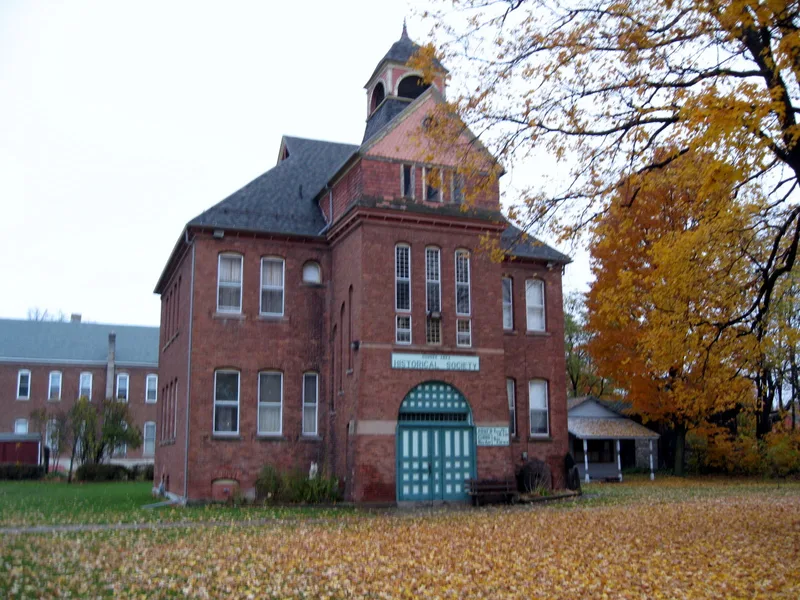
Dundee's historic core is a compact village district centered on the intersection of Main, Water and Seneca Streets in Yates County, New York. It holds 84 contributing resources, including attached brick commercial rows, four churches, a former eight-room school now housing the local historical society, and many dwellings built from about 1830 to about 1920. Fires in 1861 and 1894 destroyed much of downtown, so most storefronts are Italianate or late Victorian brick buildings put up soon afterward. The architectural firm Pierce & Bickford designed several, including the Harpending and Bigelow Blocks and the First Presbyterian Church. Seneca Street and southern Main Street hold large frame houses in Greek Revival, Italianate, Eastlake, Second Empire and Queen Anne styles, some with carriage steps and hitching posts. The district was listed for its commercial and educational history and for the concentration of well-preserved nineteenth-century architecture. Four modern buildings, including a bank, a post office and a supermarket, are excluded from the count of contributing resources.
Machine-generated summary. This summary was generated by a language model from the official nomination document and has not been reviewed line by line by an editor. It may contain errors. Check the source document before relying on any detail. Source: nomination document (PDF) · catalog entry. Generated October 2026 (model claude-sonnet-5-5, prompt v1.0-2026-10-29).
| Period of significance | ca. 1830 - ca. 1920 |
|---|---|
| Styles | Greek Revival, Gothic Revival, Italian Villa, Italianate, Late Victorian eclectic, Eastlake/Stick, Romanesque Revival, vernacular and Classical (early 20th century) |
| Areas of significance | Commerce, Education, Architecture |
| Acreage | 40 |
| Boundary source | NPS cultural-resource GIS polygon |
| Full listing page | Dundee Village Historic District (property record) |
What listing means for this property
This is a historic district. Buildings within its boundary are either contributing (they add to the district's significance) or non-contributing. Owners of contributing income-producing buildings can claim the 20% federal rehabilitation tax credit; homeowners should look at state credits. National Register districts impose no design review by themselves; a local historic district ordinance, if one exists, does (the difference explained).
General information, not legal or tax advice. Rules change; confirm with your State Historic Preservation Office or a qualified adviser.