Olmsted Park System

Why it's listed
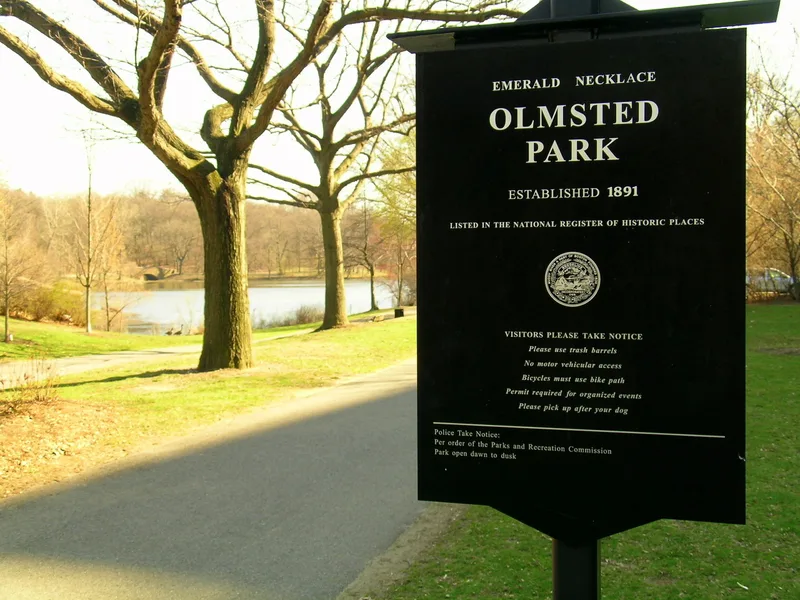
Boston's Olmsted Park System is a chain of parks and parkways, often called the Emerald Necklace, that curves south from the Back Bay Fens through the Muddy River corridor, Jamaica Pond and the Arborway to Franklin Park. Frederick Law Olmsted Sr. planned it in the late 1870s and after, partly to replace a polluted, flood-prone tidal swamp with an informal park. The plan also tied newly annexed parts of the city to its historic center and offered varied recreation, from pond boating to riding and picnicking. Franklin Park, designed in 1885 as a rural retreat for working-class residents, ended the system. Surviving features include bridges and a shelter by Shepley, Rutan and Coolidge, Richardson's Boylston Street bridge, and sculpture by Daniel Chester French. Overpasses, a stadium and other additions have altered parts, but much of Olmsted's road pattern remains. The system is recognized as a national example of large-scale landscape and regional planning.
Machine-generated summary. This summary was generated by a language model from the official nomination document and has not been reviewed line by line by an editor. It may contain errors. Check the source document before relying on any detail. Source: nomination document (PDF) · catalog entry. Generated October 2026 (model claude-sonnet-5-5, prompt v1.0-2026-10-29).
| Period of significance | 19th and 20th Century; specific dates 1879, 1881, 1885, 1892 |
|---|---|
| Areas of significance | Community Planning and Development, Landscape Architecture, Entertainment/Recreation |
| Acreage | 843 |
| Boundary source | NPS cultural-resource GIS polygon |
| Full listing page | Olmsted Park System (property record) |
What listing means for this property
This is a historic district. Buildings within its boundary are either contributing (they add to the district's significance) or non-contributing. Owners of contributing income-producing buildings can claim the 20% federal rehabilitation tax credit; homeowners should look at state credits. National Register districts impose no design review by themselves; a local historic district ordinance, if one exists, does (the difference explained).
General information, not legal or tax advice. Rules change; confirm with your State Historic Preservation Office or a qualified adviser.