Central Square Historic District

Why it's listed
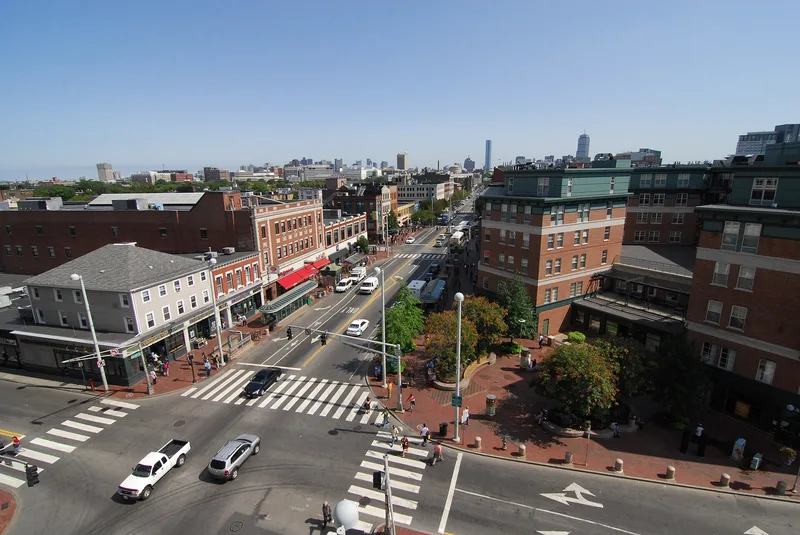
Central Square is the commercial heart of Cambridgeport, and this district covers seven blocks of Massachusetts Avenue from Bigelow and Sellers Streets to Lafayette Square. It contains 89 buildings dating from 1807 to 1987, 61 of them contributing, along with the historic street pattern. The oldest is Dana Row, a Federal brick rowhouse of 1807. Later landmarks include the Second Empire Chamberlain-Hyde Block, the Richardsonian Romanesque Cambridge Mutual Fire Insurance building, the Beaux Arts Cambridgeport Savings Bank of 1904, and Prospect House with its 1908 white terracotta Tudor facade. The ten-story Central Square Building of 1926 was Cambridge's first skyscraper. Apartment blocks such as The Longfellow show speculators' hopes for eastern Massachusetts Avenue. The district matters because its buildings record the area's growth as a full-service downtown, and its later shift toward smaller one- to three-story retail buildings after the 1912 subway brought Boston markets within easy reach.
Machine-generated summary. This summary was generated by a language model from the official nomination document and has not been reviewed line by line by an editor. It may contain errors. Check the source document before relying on any detail. Source: nomination document (PDF) · catalog entry. Generated October 2026 (model claude-sonnet-5-5, prompt v1.0-2026-10-29).
| Styles | Federal, Italianate, Second Empire, Richardsonian Romanesque, Renaissance Revival, Gothic Revival, Queen Anne, Colonial Revival, Beaux Arts, Tudor Revival, Moderne, Sullivanesque, Greek Revival |
|---|---|
| Areas of significance | Community Planning and Development, Commerce, Transportation, Architecture |
| Acreage | 32 |
| Boundary source | NPS cultural-resource GIS polygon |
| Full listing page | Central Square Historic District (property record) |
What listing means for this property
This is a historic district. Buildings within its boundary are either contributing (they add to the district's significance) or non-contributing. Owners of contributing income-producing buildings can claim the 20% federal rehabilitation tax credit; homeowners should look at state credits. National Register districts impose no design review by themselves; a local historic district ordinance, if one exists, does (the difference explained).
General information, not legal or tax advice. Rules change; confirm with your State Historic Preservation Office or a qualified adviser.