Central Gloucester Historic District

Why it's listed
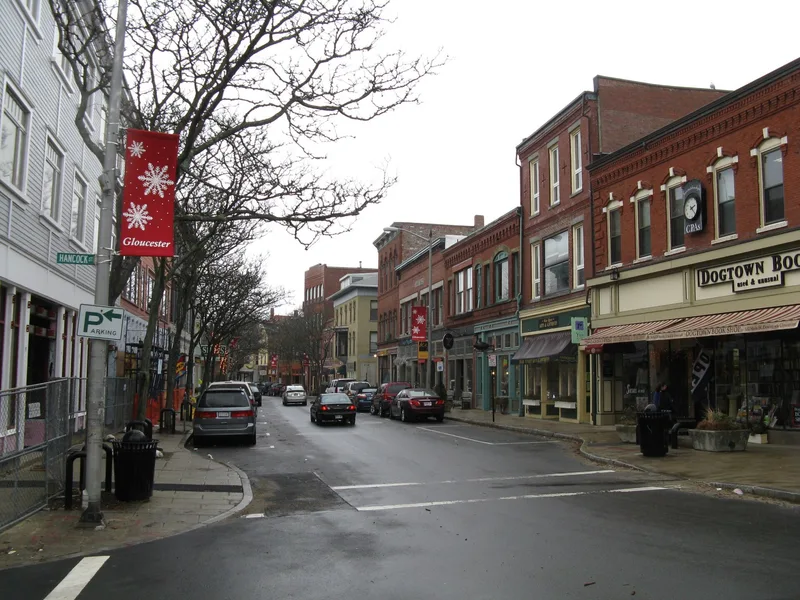
Central Gloucester Historic District is the institutional, commercial and early residential heart of the city of Gloucester, Massachusetts. It takes in nearly 200 closely spaced buildings on 36 acres, facing Gloucester Harbor on the south side of the Cape Ann peninsula. Main and Middle Streets run parallel to the shoreline on rising ridges above the water and wharves, with Pine, Pleasant and Prospect Streets, Gould Court and Dale Avenue connected to them. The buildings include free-standing wood-frame houses from the eighteenth to the early twentieth century, government, civic and religious structures, and commercial blocks of the nineteenth and early twentieth centuries. Middle Street has the greatest concentration of early buildings, with 17 of 35 structures between Pleasant and Washington Streets predating 1840. Clapboarded houses with gambrel and hipped roofs sit close to the street beside granite curbstones and steps. The Hardy-Parsons House, built about 1760, is a Georgian enlargement with a scroll-pediment doorway and fine paneling. The district was listed for the integrity of its buildings and streets.
Machine-generated summary. This summary was generated by a language model from the official nomination document and has not been reviewed line by line by an editor. It may contain errors. Check the source document before relying on any detail. Source: nomination document (PDF) · catalog entry. Generated October 2026 (model claude-sonnet-5-5, prompt v1.0-2026-10-29).
| Areas of significance | Industry, Commerce, Politics/Government, Architecture, Religion |
|---|---|
| Acreage | 36.5 |
| Boundary source | NPS cultural-resource GIS polygon |
| Full listing page | Central Gloucester Historic District (property record) |
What listing means for this property
This is a historic district. Buildings within its boundary are either contributing (they add to the district's significance) or non-contributing. Owners of contributing income-producing buildings can claim the 20% federal rehabilitation tax credit; homeowners should look at state credits. National Register districts impose no design review by themselves; a local historic district ordinance, if one exists, does (the difference explained).
General information, not legal or tax advice. Rules change; confirm with your State Historic Preservation Office or a qualified adviser.