Sweet Auburn Historic District

Why it's listed
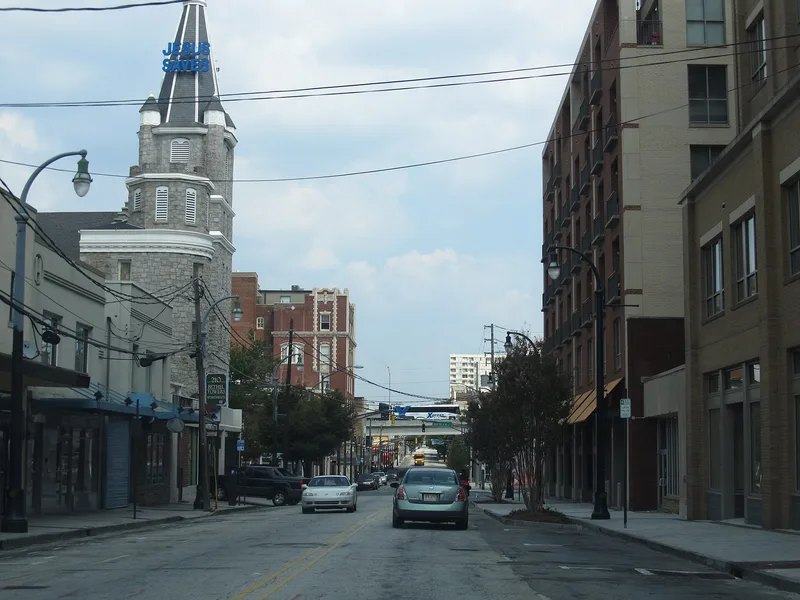
Sweet Auburn is a four-block stretch of Auburn Avenue in Atlanta that once anchored the city's black business and social life. Buildings from the 1890s to the 1940s remain on the west side of the I-85/75 connector, which cut the original mile-long avenue apart. Key landmarks include the Atlanta Life Insurance Company with its Beaux-Arts facade, the Romanesque Revival Big Bethel AME Church begun in 1891, the Georgian Revival Butler Street YMCA, the Odd Fellows Building and Auditorium of 1912-1913, the Herndon Building, and the Municipal Market. The district matters because segregation after the Civil War concentrated black shops, professionals and institutions here, and the avenue earned the name given by John Wesley Dobbs and a reputation as the richest Negro street in the world. By 1930 only fourteen black businesses remained in central Atlanta, while Auburn Avenue flourished. The remaining buildings show that period of enterprise and community leadership.
Machine-generated summary. This summary was generated by a language model from the official nomination document and has not been reviewed line by line by an editor. It may contain errors. Check the source document before relying on any detail. Source: nomination document (PDF) · catalog entry. Generated October 2026 (model claude-sonnet-5-5, prompt v1.0-2026-10-29).
| Period of significance | 1865-1930 |
|---|---|
| Styles | No single style; Beaux-Arts classical (Atlanta Life), Romanesque Revival (Big Bethel AME Church), Georgian Revival (Butler Street YMCA) |
| Areas of significance | Commerce, Economics, Black, Social History |
| Acreage | 19 |
| Boundary source | NPS cultural-resource GIS polygon |
| Full listing page | Sweet Auburn Historic District (property record) |
What listing means for this property
This is a historic district. Buildings within its boundary are either contributing (they add to the district's significance) or non-contributing. Owners of contributing income-producing buildings can claim the 20% federal rehabilitation tax credit; homeowners should look at state credits. National Register districts impose no design review by themselves; a local historic district ordinance, if one exists, does (the difference explained).
General information, not legal or tax advice. Rules change; confirm with your State Historic Preservation Office or a qualified adviser.