Lower Nob Hill Apartment Hotel District

Why it's listed
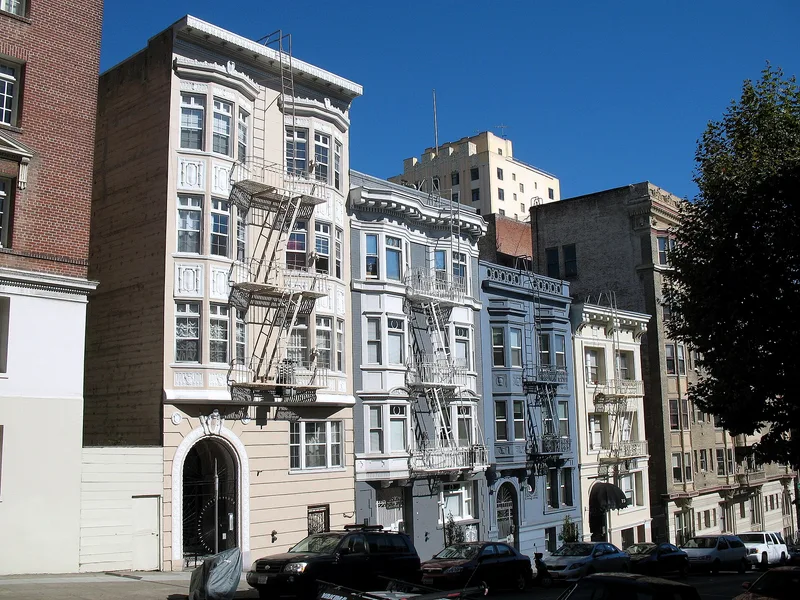
Covering about five blocks of three parallel east-west streets on the south slope of Nob Hill, this San Francisco district is made up almost entirely of 3- to 7-story apartment buildings and residential hotels that fill their front lot lines. Most went up between 1906 and 1925, and their facades follow a common Sullivanesque pattern of flat roofs, boldly projecting galvanized iron cornices and a column-like arrangement of wall and windows. Ornament varies from building to building, drawing on Classical, Renaissance, Mission/Spanish Revival and Art Nouveau motifs, with a few Art Deco buildings from the 1930s. About 46 percent of buildings are stucco and 42 percent brick. Roughly half have shops at street level, mostly serving residents. The district is listed because it preserves a cohesive, largely intact neighborhood of walk-to-work apartment housing from the early twentieth century, with 297 contributing buildings, distinct from the larger, more commercial Tenderloin to the south.
Machine-generated summary. This summary was generated by a language model from the official nomination document and has not been reviewed line by line by an editor. It may contain errors. Check the source document before relying on any detail. Source: nomination document (PDF) · catalog entry. Generated October 2026 (model claude-sonnet-5-5, prompt v1.0-2026-10-29).
| Styles | Late 19th and Early 20th Century American Movements; Late 19th and 20th Century Revivals; Renaissance (Sullivanesque composition) |
|---|---|
| Areas of significance | Architecture, Social History |
| Acreage | 57 |
| Boundary source | NPS cultural-resource GIS polygon |
| Full listing page | Lower Nob Hill Apartment Hotel District (property record) |
What listing means for this property
This is a historic district. Buildings within its boundary are either contributing (they add to the district's significance) or non-contributing. Owners of contributing income-producing buildings can claim the 20% federal rehabilitation tax credit; homeowners should look at state credits. National Register districts impose no design review by themselves; a local historic district ordinance, if one exists, does (the difference explained).
General information, not legal or tax advice. Rules change; confirm with your State Historic Preservation Office or a qualified adviser.