Lick, James, Mill

Why it's listed
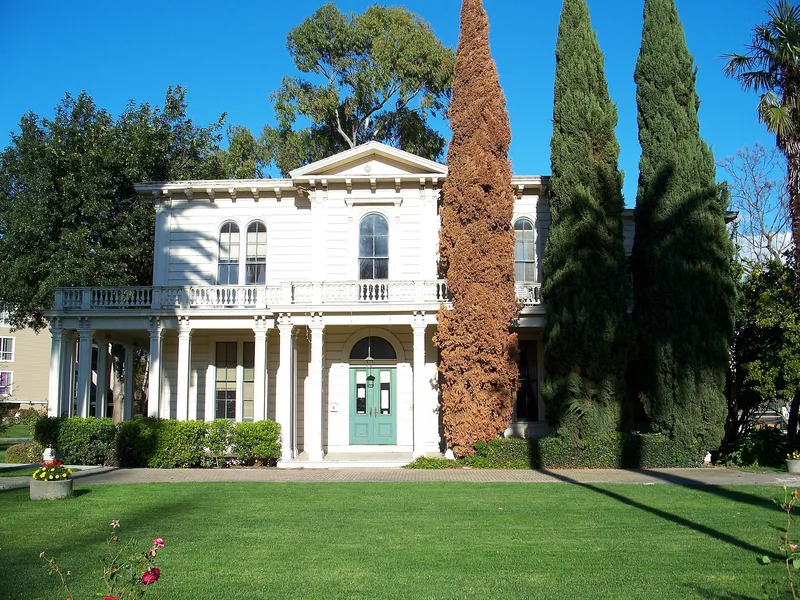
Along Montague Expressway in Santa Clara sits what remains of James Lick's mill complex. Lick began a brick flour mill here in 1855, known locally as "Lick's Folly," and completed it with a round brick granary by 1857. The granary is 66 feet across, with brick walls two feet thick, and was designed to be fire and rat proof. Lick also built a two-story Italianate house around 1858, marked by a front veranda, bracketed eaves and paired arched windows. A small Victorian office building and a rectangular mill pond complete the nominated grounds. The mill burned in 1882, and the site later served as a paper mill and then a chemical works producing alcohol, potash and other products. Lick also ran a notable orchard and pioneered new fruits and horticultural methods. The property was listed for its association with Lick, its industrial history and its early architecture.
Significance in brief: The nomination argues the site is historically important for its ties to James Lick, an influential early Californian. It is commercially important as the site of a flour mill, then a paper mill, then a chemical works. It is architecturally important for the Italianate house and the unusual round brick granary.
Machine-generated summary. This summary was generated by a language model from the official nomination document and has not been reviewed line by line by an editor. It may contain errors. Check the source document before relying on any detail. Source: nomination document (PDF) · National Archives catalog entry. NRHP reference 82002272, listed March 2, 1982. Summary generated October 2026 (model claude-sonnet-5-5, prompt v1.0-2026-10-29, confidence medium).
Key facts
| Address | 305 Montague Expwy., Santa Clara |
|---|---|
| County | Santa Clara County |
| Listed | March 2, 1982 |
| Reference number | 82002272 |
| Resource type | Building |
| Period of significance | 1856-1860+ |
| Architect / builder | Unknown |
| Architectural style | Italianate (house); Victorian (office building) |
| Criteria |
|
| Areas of significance | Industry, Commerce, Architecture |
| Level of significance | State |
| Status (as stated in the nomination) | Listed as partially occupied; primary historic structures in fair condition. The house has been used as an office, and the original mill burned in 1882 with no above-ground remains. |
| Acreage | 3.8 |
| Coordinates | 37.39977, -121.94279 (NPS GIS) |
What listing means for this property
For an income-producing building, listing (individually or as a contributing building in a district) is the gateway to the 20% federal rehabilitation tax credit on qualified rehabilitation costs, often stackable with state credits. Work claiming the credit must follow the Secretary of the Interior's Standards and be approved in advance.
Listing does not restrict a private owner acting without federal money or permits; where federal funding or licensing is involved, Section 106 review applies.
General information, not legal or tax advice. Rules change; confirm with your State Historic Preservation Office or a qualified adviser.
Sources and further reading
- National Park Service, National Register of Historic Places database (snapshot May 2026), reference 82002272.
- Nomination form (PDF, National Archives) — catalog entry
- Wikipedia article (used for cross-checking only; text not reproduced here)
- Wikidata Q6138042
- This listing as JSON
Last updated October 2026. Found an error? See the editorial policy for how to report it.