San Juan Bautista Third Street Historic District

Why it's listed
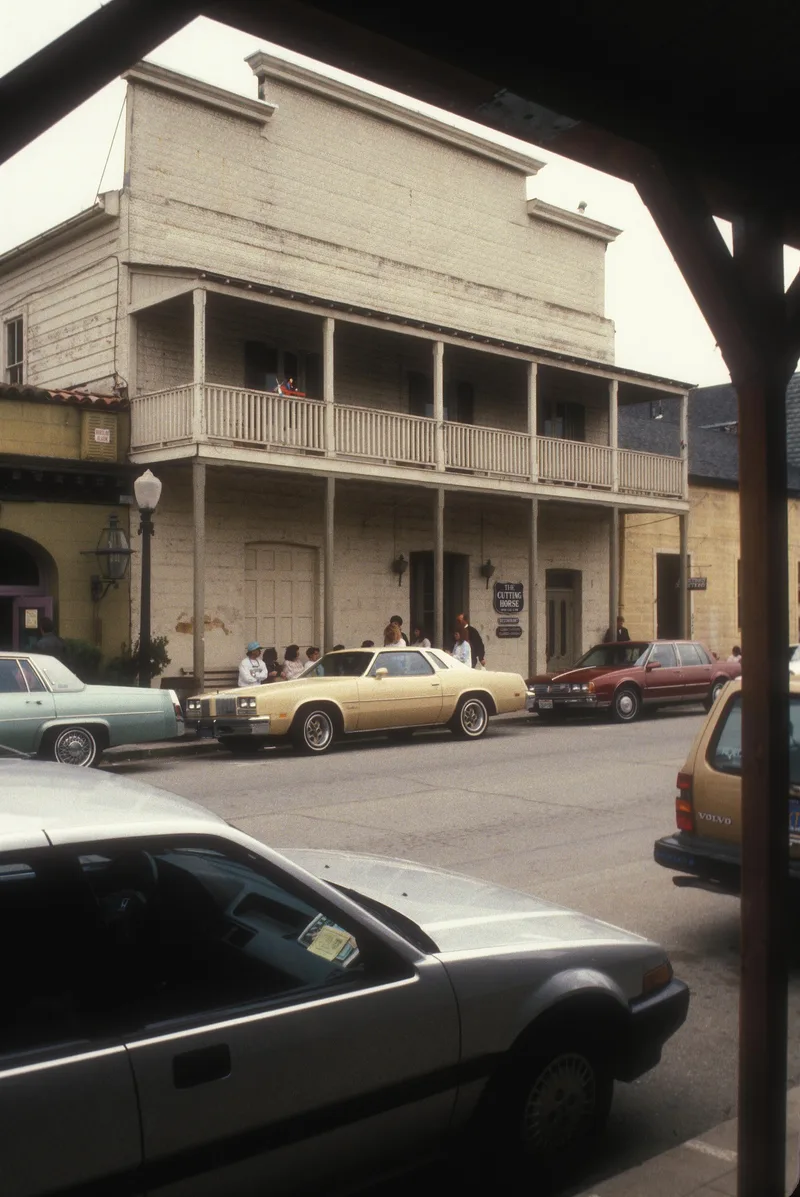
Third Street is the historic commercial core of San Juan Bautista, a small agricultural town southwest of its Spanish mission. The four-block district holds buildings dating from about 1834 to 1938, most with one or two storefronts and side walls that abut their neighbors. Wood and adobe are the main materials, and four sandstone buildings were added between 1867 and 1871. Styles include Spanish Colonial adobe, Monterey, Carpenter Italianate and, most commonly, the Western False Front. The oldest building, the Casa de Anza Adobe, was built under Mexican rule and became a cantina in 1870. Commercial development began in 1849, when the Gold Rush brought visitors and American rule reshaped the town. Third Street stayed the town's commercial center through the early twentieth century, despite being bypassed by the railroad and later by Highway 101 development. Little new construction occurred between 1938 and the late 1950s, so the streetscape remains largely intact. The district was listed for local significance in commerce and architecture.
Significance in brief: The district is significant at the local level under Criteria A and C. It shows the American-driven commercial growth of San Juan Bautista from the Gold Rush era through the early twentieth century. It also keeps a range of vernacular building types, including adobe, Monterey, Carpenter Italianate and Western False Front buildings, in an intact small-town streetscape.
Machine-generated summary. This summary was generated by a language model from the official nomination document and has not been reviewed line by line by an editor. It may contain errors. Check the source document before relying on any detail. Source: nomination document (PDF) · National Archives catalog entry. NRHP reference 08001277, listed January 9, 2009. Summary generated October 2026 (model claude-sonnet-5-5, prompt v1.0-2026-10-29, confidence medium).
Key facts
| Address | 3rd St. between 406 3rd St. and Franklin St., San Juan Bautista |
|---|---|
| County | San Benito County |
| Listed | January 9, 2009 |
| Reference number | 08001277 |
| Resource type | District |
| Period of significance | 1849-1938 |
| Architect / builder | Mostly unknown local builders; William R. Barbee is named as builder of the 103 and 107-109 Third Street buildings |
| Architectural style | Spanish Colonial (adobe construction), Western False Front, Monterey, Carpenter Italianate |
| Criteria |
|
| Areas of significance | Commerce, Architecture |
| Level of significance | Local |
| Status (as stated in the nomination) | The description states the district retains good to excellent integrity. Buildings are still in commercial use, and some upper floors are apartments. |
| Acreage | 3 |
| Coordinates | 36.84464, -121.53697 (NPS GIS) |
What listing means for this property
This is a historic district. Buildings within its boundary are either contributing (they add to the district's significance) or non-contributing. Owners of contributing income-producing buildings can claim the 20% federal rehabilitation tax credit; homeowners should look at state credits. National Register districts impose no design review by themselves; a local historic district ordinance, if one exists, does (the difference explained).
General information, not legal or tax advice. Rules change; confirm with your State Historic Preservation Office or a qualified adviser.
Sources and further reading
- National Park Service, National Register of Historic Places database (snapshot May 2026), reference 08001277.
- Nomination form (PDF, National Archives) — catalog entry
- Wikidata Q141642066
- This listing as JSON
Last updated October 2026. Found an error? See the editorial policy for how to report it.