Rose Cliff
Also known as: Rose Cliff Fruit Farm; VDHR File No. 136-5049-0029 and 136-5051

Why it's listed
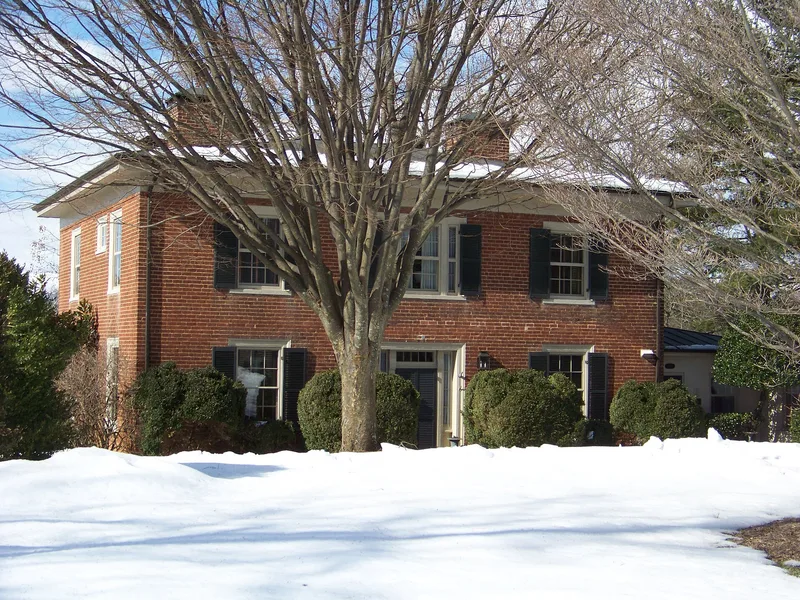
Rose Cliff is a brick farmhouse built around 1850 on about 1.5 acres above the South River in Waynesboro, Virginia. It has two stories, three bays, a central passage and double-pile plan, a hipped standing-seam metal roof and a long front porch facing the river. Inside, fluted pilasters, corner-block trim and a turned-baluster stair reflect Greek Revival taste. The house was probably built by William Brooks, who bought the plantation in 1822. Later it became the center of Rose Cliff Fruit Farm, run by James Craig from 1893, which shipped Albemarle Pippin and other apples by rail to Richmond, New York City and markets in Great Britain. The orchard was subdivided around 1930, and the land became part of the Tree Streets neighborhood. The house is valued for its role in the Valley's apple industry and as one of the few and finest surviving Greek Revival dwellings in the city, with its original character largely intact.
Significance in brief: The house is argued to be significant under Criterion A for agriculture, as the center of the Rose Cliff Fruit Farm, an early commercial apple operation in the Valley. It is also significant under Criterion C as one of the few surviving and finest Greek Revival dwellings in Waynesboro, with little change to its original fabric.
Machine-generated summary. This summary was generated by a language model from the official nomination document and has not been reviewed line by line by an editor. It may contain errors. Check the source document before relying on any detail. Source: nomination document (PDF) · National Archives catalog entry. NRHP reference 06000755, listed August 30, 2006. Summary generated October 2026 (model claude-sonnet-5-5, prompt v1.0-2026-10-29, confidence high).
Key facts
| Address | 835 Oak Ave., Waynesboro (Independent City) |
|---|---|
| County | Waynesboro |
| Listed | August 30, 2006 |
| Reference number | 06000755 |
| Resource type | Building |
| Period of significance | circa 1850 - circa 1930 |
| Architect / builder | unknown |
| Architectural style | Mid-19th Century: Greek Revival |
| Criteria |
|
| Areas of significance | Agriculture, Architecture |
| Level of significance | Local |
| Status (as stated in the nomination) | Currently used as a private single dwelling; described as well preserved with few alterations to original fabric. |
| Acreage | 1.6 |
| Within district | Tree Streets Historic District |
| Coordinates | 38.06204, -78.90230 (NPS GIS) |
What listing means for this property
National Register listing is honorary: it recognises significance and does not restrict what a private owner may do without federal money or permits. It unlocks the 20% federal rehabilitation tax credit for income-producing buildings, state credits in many states, and Section 106 review when federal agencies are involved. See what listing means in practice.
General information, not legal or tax advice. Rules change; confirm with your State Historic Preservation Office or a qualified adviser.
Sources and further reading
- National Park Service, National Register of Historic Places database (snapshot May 2026), reference 06000755.
- Nomination form (PDF, National Archives) — catalog entry
- Wikipedia article (used for cross-checking only; text not reproduced here)
- Wikidata Q7367688
- This listing as JSON
Last updated October 2026. Found an error? See the editorial policy for how to report it.