McCormick, Cyrus, Farm and Workshop
Also known as: Walnut Grove
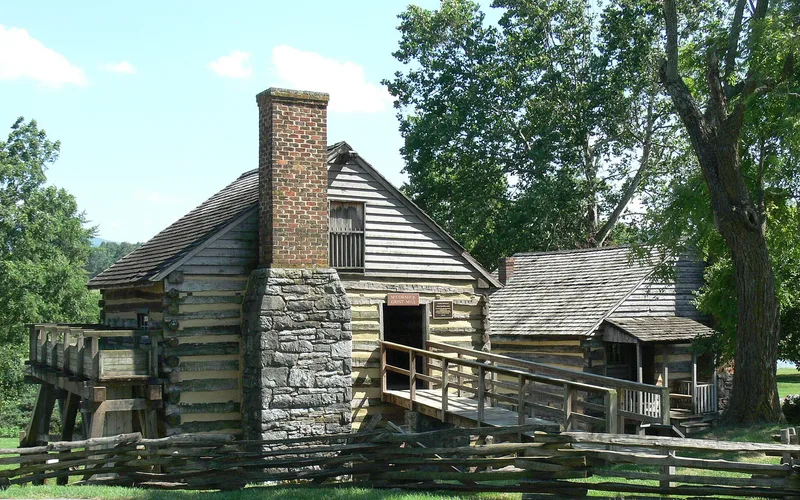

Why it's listed
Walnut Grove, near Steeles Tavern in Rockbridge County, Virginia, is the farm where Cyrus McCormick was born in 1809 and where he developed his reaper. Five buildings from the McCormick period survive: a brick main house built around 1822, a two-story log blacksmith shop on a stone foundation, a grist mill with working wooden parts, a small office and a slave cabin. The cabin has been moved and converted to a rest room, losing its second story and chimney. Today the farm operates as an experimental farm, and a three-acre memorial with models of early reapers is open to the public. The site matters because McCormick built the first working reaper here, and manufacture began here before moving to other states and then Chicago in 1847. The reaper let crops be cut faster with less labor, aided settlement of western lands and helped feed the North during the Civil War.
Significance in brief: The property is the birthplace of Cyrus McCormick, who built the first working reaper here, and where commercial manufacture of the reaper began. The reaper changed grain harvesting, aided westward settlement and supported Northern food supplies during the Civil War. McCormick also pioneered modern business methods.
Machine-generated summary. This summary was generated by a language model from the official nomination document and has not been reviewed line by line by an editor. It may contain errors. Check the source document before relying on any detail. Source: nomination document (PDF) · National Archives catalog entry. NRHP reference 66000846, listed October 15, 1966. Summary generated October 2026 (model claude-sonnet-5-5, prompt v1.0-2026-10-29, confidence high).
Key facts
| Address | S of Staunton on U.S. 11 and CR 606 at Walnut Grove, Steele's Tavern |
|---|---|
| County | Rockbridge County |
| Listed | October 15, 1966 |
| Reference number | 66000846 |
| Resource type | District |
| Period of significance | 1809-1847 |
| Areas of significance | Agriculture, Invention |
| Level of significance | National |
| National Historic Landmark | Yes, designated July 19, 1964 |
| Status (as stated in the nomination) | Condition listed as excellent. Used as an experimental farm with a public memorial area open to visitors; the slave cabin was moved and converted to a public rest room. |
| Acreage | 644 |
| Coordinates | 37.93350, -79.21443 (NPS GIS) |
What listing means for this property
This is a historic district. Buildings within its boundary are either contributing (they add to the district's significance) or non-contributing. Owners of contributing income-producing buildings can claim the 20% federal rehabilitation tax credit; homeowners should look at state credits. National Register districts impose no design review by themselves; a local historic district ordinance, if one exists, does (the difference explained).
General information, not legal or tax advice. Rules change; confirm with your State Historic Preservation Office or a qualified adviser.
Sources and further reading
- National Park Service, National Register of Historic Places database (snapshot May 2026), reference 66000846.
- Nomination form (PDF, National Archives) — catalog entry
- Wikipedia article (used for cross-checking only; text not reproduced here)
- Wikidata Q5201127
- This listing as JSON
Last updated October 2026. Found an error? See the editorial policy for how to report it.