Valentine Museum
Also known as: Wickham-Valentine House

Why it's listed
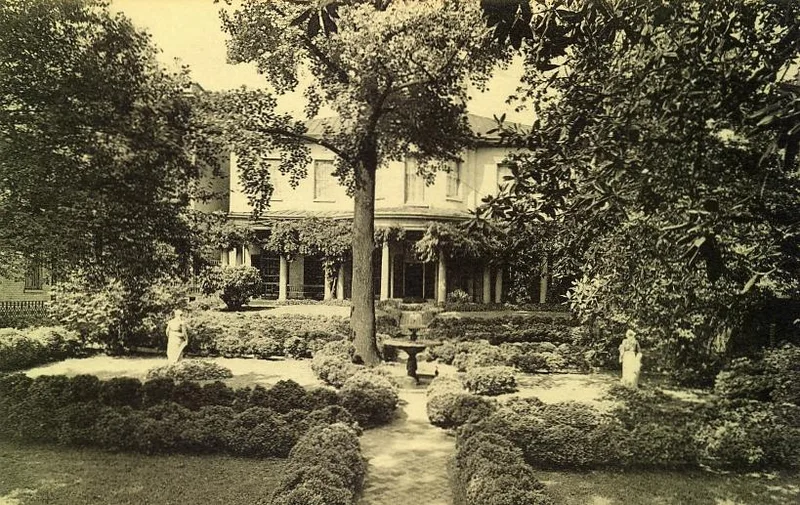
Three adjoining buildings on East Clay Street in Richmond make up the Valentine Museum. The centerpiece is the Wickham-Valentine House, a two-story stuccoed Federal house built in 1812 by lawyer John Wickham, who served on the defense counsel at the trial of Aaron Burr. Its architect is unknown, though Robert Mills and Benjamin Latrobe have both been suggested. Its interior includes shaped rooms, a spiral staircase and a Victorian drawing room added by a later occupant, John Ballard. Collector Mann Valentine II bought the house in 1882 and, at his death in 1892, left it with his collection and an endowment as a museum for Richmond. Next door stand three Victorian townhouses from about 1870, remodeled in 1938 to hold the collection, and the Greek Revival Bransford-Cecil House of 1840, moved from North 5th Street in 1954. Together they house galleries, a library and archives important to Virginia history.
Significance in brief: The Wickham-Valentine House is considered one of the finest Federal houses in the country and was left to the city of Richmond as a museum by collector Mann Valentine II. The museum's collections and archives are among the most valuable for Richmond and Virginia history. The buildings are distinguished examples of architecture and reminders of the early Richmond cityscape.
Machine-generated summary. This summary was generated by a language model from the official nomination document and has not been reviewed line by line by an editor. It may contain errors. Check the source document before relying on any detail. Source: nomination document (PDF) · National Archives catalog entry. NRHP reference 69000329, listed June 11, 1969. Summary generated October 2026 (model claude-sonnet-5-5, prompt v1.0-2026-10-29, confidence high).
Key facts
| Address | 1005--1015 E. Clay St., Richmond (Independent City) |
|---|---|
| County | Richmond (city and county) |
| Listed | June 11, 1969 |
| Reference number | 69000329 |
| Resource type | Building |
| Period of significance | 19th Century (specific dates 1812; 1870; 1840) |
| Architect / builder | Wickham-Valentine House built by John Wickham; architect unknown, attributed to both Robert Mills and Benjamin Latrobe |
| Architectural style | Federal (Wickham-Valentine House); Victorian townhouses; Greek Revival (Bransford-Cecil House) |
| Areas of significance | Architecture |
| Level of significance | National, State |
| National Historic Landmark | Yes, designated November 11, 1971 |
| Status (as stated in the nomination) | Occupied and in use as an active museum; condition listed as fair, with alterations noted. |
| Acreage | 0.7 |
| Within district | James River and Kanawha Canal Historic District |
| Coordinates | 37.54140, -77.43116 (NPS GIS) |
What listing means for this property
National Register listing is honorary: it recognises significance and does not restrict what a private owner may do without federal money or permits. It unlocks the 20% federal rehabilitation tax credit for income-producing buildings, state credits in many states, and Section 106 review when federal agencies are involved. See what listing means in practice.
General information, not legal or tax advice. Rules change; confirm with your State Historic Preservation Office or a qualified adviser.
Sources and further reading
- National Park Service, National Register of Historic Places database (snapshot May 2026), reference 69000329.
- Nomination form (PDF, National Archives) — catalog entry
- Wikipedia article (used for cross-checking only; text not reproduced here)
- Wikidata Q7998382
- This listing as JSON
Last updated October 2026. Found an error? See the editorial policy for how to report it.