Carver Industrial Historic District
Also known as: 127-5812

Why it's listed
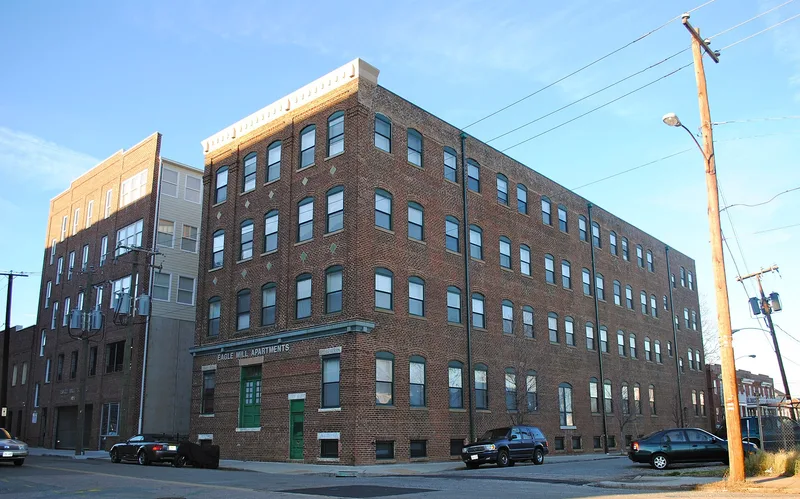
Six and a half blocks northwest of downtown Richmond make up an industrial district that grew between 1890 and 1930 beside the Richmond, Fredericksburg and Potomac Railroad tracks. Thirteen contributing buildings remain, all brick, with intricate patterned brickwork. Styles include Second Empire, Romanesque, Colonial Revival, Italian Renaissance and Art Deco. The earliest large non-railroad complex was the Home Brewery, built around 1891 and later run by the Peter Stumpf Brewing Company. Other buildings housed an ice company, a tobacco warehouse and factory, paper and printing firms, and an electric railway substation. Industry moved here after the 1882 riverfront fire led to ordinances limiting riverfront industries, and after steam locomotives were banned from part of Broad Street. The district sits within the larger Carver neighborhood, which shifted from a middle-class community to a largely African-American working-class one around 1900. As rail transport declined, many buildings were left vacant and several were demolished, including the railroad freight depots.
Significance in brief: The district holds a notable collection of finely detailed brick industrial buildings in styles ranging from Second Empire and Romanesque to Colonial Revival, Italian Renaissance and Art Deco. It documents Richmond's industrial growth along the railroad, which drew firms after the 1882 riverfront fire and the ban on steam locomotives on Broad Street. Breweries, printers, paper makers and tobacco firms are represented.
Machine-generated summary. This summary was generated by a language model from the official nomination document and has not been reviewed line by line by an editor. It may contain errors. Check the source document before relying on any detail. Source: nomination document (PDF) · National Archives catalog entry. NRHP reference 00000559, listed May 26, 2000. Summary generated October 2026 (model claude-sonnet-5-5, prompt v1.0-2026-10-29, confidence medium).
Key facts
| Address | Marshall, Lombardy, Clay, and Harrison Sts., Richmond (Independent City) |
|---|---|
| County | Richmond (city and county) |
| Listed | May 26, 2000 |
| Reference number | 00000559 |
| Resource type | District |
| Architectural style | Queen Anne, Romanesque, Colonial Revival, Italian Renaissance, Second Empire, Art Deco (also Gothic Revival influences) |
| Areas of significance | Architecture, Commerce, Industry |
| Level of significance | Local |
| Status (as stated in the nomination) | Current functions listed include domestic multiple dwelling, commerce/trade, manufacturing and vacant/not in use; several railroad-era buildings and others have been demolished. |
| Acreage | 23.3 |
| Within district | Carver Residential Historic District |
| Coordinates | 37.55472, -77.45214 (NPS GIS) |
What listing means for this property
This is a historic district. Buildings within its boundary are either contributing (they add to the district's significance) or non-contributing. Owners of contributing income-producing buildings can claim the 20% federal rehabilitation tax credit; homeowners should look at state credits. National Register districts impose no design review by themselves; a local historic district ordinance, if one exists, does (the difference explained).
General information, not legal or tax advice. Rules change; confirm with your State Historic Preservation Office or a qualified adviser.
Sources and further reading
- National Park Service, National Register of Historic Places database (snapshot May 2026), reference 00000559.
- Nomination form (PDF, National Archives) — catalog entry
- Wikipedia article (used for cross-checking only; text not reproduced here)
- Wikidata Q16825764
- This listing as JSON
Last updated October 2026. Found an error? See the editorial policy for how to report it.