Conner House

Why it's listed
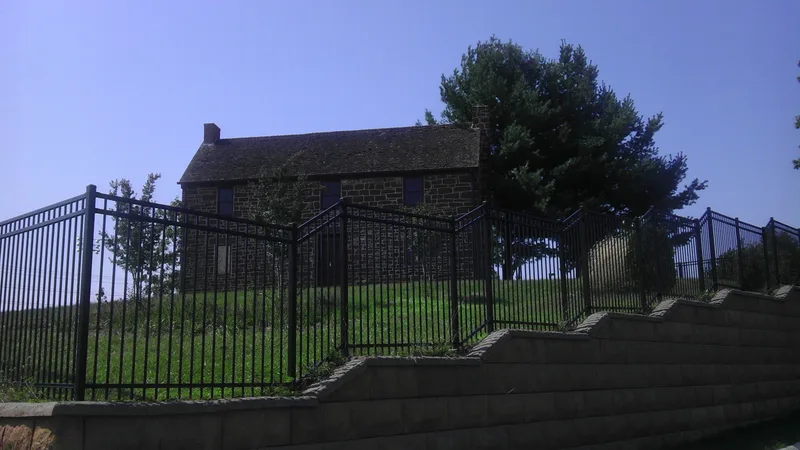
Near Manassas Park, Virginia, this two-story red sandstone house sits on a hill above the Southern Railway tracks. The older section dates to about 1800-1820 and was probably built as an overseer's house; a stone wing added in 1855 changed its plan from side-hall to central-hall. In 1861 the building served as headquarters for General Joseph E. Johnston, commander of the Confederate Army, from July to November, and later as a hospital for the wounded of both Battles of Manassas. A Timothy O'Sullivan photograph of 1862 labeled "the Yellow Hospital" has been identified as showing the house. From 1914 to 1973 the Conner family owned it, building a 400-acre dairy farm that shipped milk to Washington. The city of Manassas Park bought the house in 1973. Vacancy and vandalism have badly damaged the interior, but the stone shell survives, and the Manassas Park Woman's Club and other citizens have worked to restore it as a reminder of the area's early history.
Significance in brief: The house served as General Joseph E. Johnston's Confederate headquarters from July to November 1861 and as a hospital after the First and Second Battles of Manassas. It is also one of the few surviving antebellum residences in the Manassas area, representing a local dwelling type. In the 20th century it belonged to the Conner family, who ran one of the county's largest dairy farms.
Machine-generated summary. This summary was generated by a language model from the official nomination document and has not been reviewed line by line by an editor. It may contain errors. Check the source document before relying on any detail. Source: nomination document (PDF) · National Archives catalog entry. NRHP reference 81000645, listed October 6, 1981. Summary generated October 2026 (model claude-sonnet-5-5, prompt v1.0-2026-10-29, confidence high).
Key facts
| Address | Conner Dr., Manassas Park |
|---|---|
| County | Prince William County |
| Listed | October 6, 1981 |
| Reference number | 81000645 |
| Resource type | Building |
| Architect / builder | unknown |
| Criteria |
|
| Areas of significance | Military, Architecture, Agriculture |
| Level of significance | State |
| Status (as stated in the nomination) | Deteriorated and unoccupied, with interior damaged by vandalism; the roof was repaired in 1978 and local citizens and the city are working on restoration. |
| Acreage | 1 |
| Coordinates | 38.76555, -77.44524 (NPS GIS) |
What listing means for this property
National Register listing is honorary for a privately owned home: it does not by itself restrict what an owner may do with their own money, and it does not require public access. Restrictions come from local landmark or historic-district ordinances, which are separate (how they differ).
Owner-occupied houses are not eligible for the 20% federal rehabilitation tax credit, which applies to income-producing buildings, but many states offer credits for homeowners. Listing also opens the door to preservation easements and to buying a plaque. Start with what listing means for homeowners, renovating a listed house and selling one.
Noted as vacant in the nomination. Nomination documents can be decades old; current status may differ. If you are considering buying an empty listed property, read the due-diligence checklist.
General information, not legal or tax advice. Rules change; confirm with your State Historic Preservation Office or a qualified adviser.
Sources and further reading
- National Park Service, National Register of Historic Places database (snapshot May 2026), reference 81000645.
- Nomination form (PDF, National Archives) — catalog entry
- Wikipedia article (used for cross-checking only; text not reproduced here)
- Wikidata Q15211515
- This listing as JSON
Last updated October 2026. Found an error? See the editorial policy for how to report it.