Portsmouth Olde Towne Historic District

Why it's listed
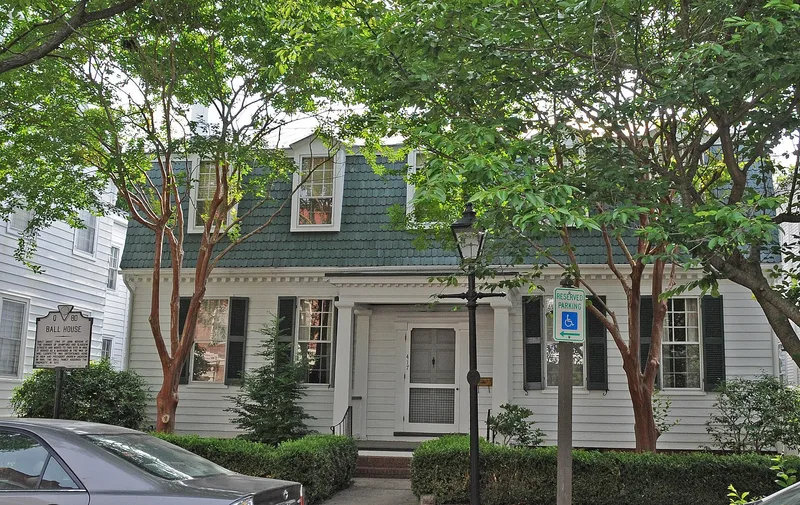
Olde Towne is a dense neighborhood of nearly twenty blocks on the northeastern edge of Portsmouth, Virginia, overlooking Crawford Bay. Its grid of tree-lined streets keeps granite curbs and brick or stone slab sidewalks, and its narrow lots hold two- and three-story townhouses in brick and frame. The area is best known for Federal and Greek Revival houses, many raised on high English basements reached by long wooden stairs, a form identified with Portsmouth because the low-lying ground prevented digging basements. Portsmouth was laid out in 1752 on land set aside by Colonel William Crawford. Notable houses include the Hill House, the 1799 Watts House and the Nivison-Ball House. Later post-Civil War and early twentieth-century buildings blend with the older ones. An extension adds residences of similar scale and three landmark churches. The district is described as the only early townscape in the Hampton Roads area, and it was the focus of Virginia's first federally-assisted conservation project, begun in 1968.
Significance in brief: The district is noted for its Federal and Greek Revival townhouses and for the "basement house" form characteristic of Portsmouth. It is described as the only early townscape in the historic Hampton Roads area. It was also the site of the 1968 Olde Towne Conservation Project, the first federally-assisted conservation project in Virginia.
Machine-generated summary. This summary was generated by a language model from the official nomination document and has not been reviewed line by line by an editor. It may contain errors. Check the source document before relying on any detail. Source: nomination document (PDF) · National Archives catalog entry. NRHP reference 70000877, listed September 8, 1970. Summary generated October 2026 (model claude-sonnet-5-5, prompt v1.0-2026-10-29, confidence medium).
Key facts
| Address | Bounded by Crawford Pkwy., London St., the Elizabeth River, and extending 0.1 mi. W of Washington St., Portsmouth (Independent City) |
|---|---|
| County | Portsmouth |
| Listed | September 8, 1970 |
| Reference number | 70000877 |
| Resource type | District |
| Architectural style | Federal and Greek Revival townhouses, with later post-Civil War and early twentieth-century buildings including Queen Anne and Romantic Revival examples |
| Areas of significance | Community Planning and Development, Architecture |
| Level of significance | State |
| Status (as stated in the nomination) | Condition listed as good and altered; many buildings have been restored, and the district was said to be about to undergo general redevelopment. Most buildings are private residences. |
| Acreage | 70 |
| Within district | Portsmouth Olde Towne Historic District (Boundary Increase) |
| Coordinates | 36.83887, -76.30148 (NPS GIS) |
What listing means for this property
This is a historic district. Buildings within its boundary are either contributing (they add to the district's significance) or non-contributing. Owners of contributing income-producing buildings can claim the 20% federal rehabilitation tax credit; homeowners should look at state credits. National Register districts impose no design review by themselves; a local historic district ordinance, if one exists, does (the difference explained).
General information, not legal or tax advice. Rules change; confirm with your State Historic Preservation Office or a qualified adviser.
Sources and further reading
- National Park Service, National Register of Historic Places database (snapshot May 2026), reference 70000877.
- Nomination form (PDF, National Archives) — catalog entry
- Wikipedia article (used for cross-checking only; text not reproduced here)
- Wikidata Q16898711
- This listing as JSON
Last updated October 2026. Found an error? See the editorial policy for how to report it.