Cedar Grove Cemetery
Also known as: VDHR File No. 124-58

The pin is a point inside the NPS boundary polygon, not a surveyed location.
Why it's listed
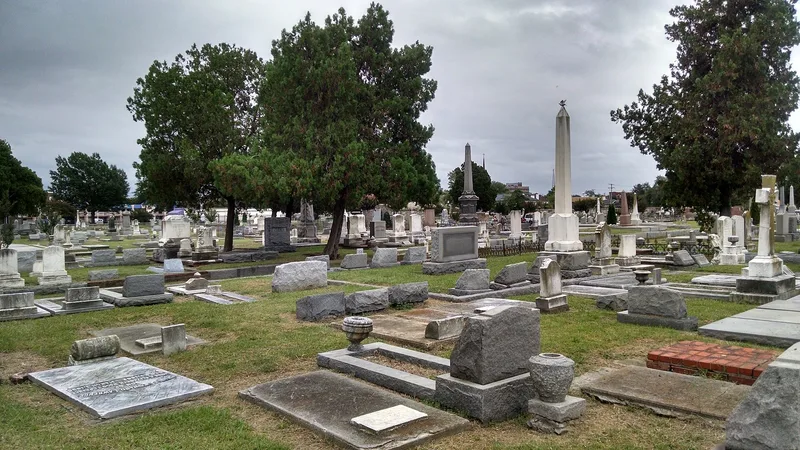
Cedar Grove Cemetery is a 5.25-acre municipal burial ground near downtown Portsmouth, Virginia. Established by the General Assembly in 1832 after burials within town limits were prohibited for sanitary reasons, it lay outside the city until annexation in 1894. More than four hundred graves are laid out in twenty-by-twenty-foot lots. Monuments include tablets, ledger stones, obelisks, columns and mausoleums, many handcrafted from marble and granite and carved with Victorian, Greek Revival and Egyptian Revival motifs. Symbols such as lambs, anchors, cannons, open Bibles and a railroad engine reflect the faith, occupations and military service of the deceased. The cemetery was listed for the quality and symbolism of this funerary art, with a period of significance from 1832 to 1932. Those buried here include ironclad designer John L. Porter, Judge James F. Crocker, Brigadier General Archibald Godwin and Victoria Cross recipient William Murdaugh. The grounds remain in use and host guided tours.
Significance in brief: The nomination argues the cemetery is significant for the design features, craftsmanship and symbolism of its funerary art, which reflects Victorian, Greek Revival and Egyptian Revival motifs. Its monuments, mostly handcrafted from marble and granite in the nineteenth century, are compared to those at Hollywood Cemetery in Richmond and the Old Cemetery in Lynchburg. It also records the people and events of Portsmouth's history, including naval, Civil War and civic figures.
Machine-generated summary. This summary was generated by a language model from the official nomination document and has not been reviewed line by line by an editor. It may contain errors. Check the source document before relying on any detail. Source: nomination document (PDF) · National Archives catalog entry. NRHP reference 92001366, listed October 15, 1992. Summary generated October 2026 (model claude-sonnet-5-5, prompt v1.0-2026-10-29, confidence high).
Key facts
| Address | 301 Fort Ln., Portsmouth (Independent City) |
|---|---|
| County | Portsmouth |
| Listed | October 15, 1992 |
| Reference number | 92001366 |
| Resource type | Site |
| Period of significance | 1832-1932 |
| Architect / builder | Anderson, William A.; Butt and Hodges; stonecutters including John Couper, John P. Hall, James Mullholland and James O'Rourke |
| Architectural style | Mid-19th Century: Greek Revival; Exotic Revival; Late Victorian |
| Criteria |
|
| Areas of significance | Art |
| Level of significance | Local |
| Status (as stated in the nomination) | Still in use, with about five burials per year, guided tours in spring and early fall, and maintenance by the city Parks and Recreation Department. |
| Acreage | 5.3 |
| Coordinates | 36.83894, -76.30769 (NPS GIS) |
What listing means for this property
Sites (archaeological sites, battlefields, landscapes) are often listed with a restricted address to protect them from looting or disturbance. Listing is honorary for private owners; federal undertakings on or near the site go through Section 106 review, and state laws may protect burials and artefacts regardless of listing.
General information, not legal or tax advice. Rules change; confirm with your State Historic Preservation Office or a qualified adviser.
Sources and further reading
- National Park Service, National Register of Historic Places database (snapshot May 2026), reference 92001366.
- Nomination form (PDF, National Archives) — catalog entry
- Wikipedia article (used for cross-checking only; text not reproduced here)
- Wikidata Q16858581
- This listing as JSON
Last updated October 2026. Found an error? See the editorial policy for how to report it.