Drew, Charles Richard, House

Why it's listed
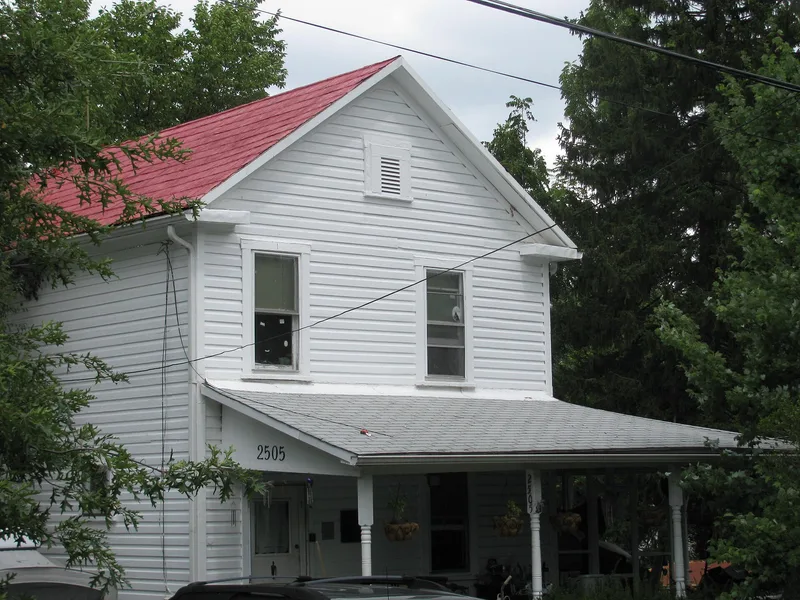
This two-story clapboard house with a gabled roof at 2505 First Street South in Arlington, Virginia, was acquired by the family of Charles Richard Drew in 1920. Drew kept it as his permanent address until 1939. The house sits on brick pillars, has a porch wrapping the south and east sides, and was enlarged from four to six rooms with a rear addition made during his residence. Inside, the living room still holds carpeting laid by his father, and family items include medals Drew won as a student. Drew, born in 1904, became the first Black American to earn a Doctor of Science in Medicine. His research on preserving blood plasma and his direction of the Blood for Britain program helped supply plasma during World War II. He resigned from the American plasma effort over a policy of segregating blood by race, then headed Howard University's surgery department. The house is recognized for its link to his life and achievements.
Significance in brief: The house is nominated for its association with Dr. Charles Richard Drew, a surgeon and researcher whose work on blood plasma preservation and the Blood for Britain program saved many lives in World War II. He was the first Black American to earn a Doctor of Science in Medicine degree. He later led Howard University's surgery department and trained Black physicians.
Machine-generated summary. This summary was generated by a language model from the official nomination document and has not been reviewed line by line by an editor. It may contain errors. Check the source document before relying on any detail. Source: nomination document (PDF) · National Archives catalog entry. NRHP reference 76002095, listed May 11, 1976. Summary generated October 2026 (model claude-sonnet-5-5, prompt v1.0-2026-10-29, confidence high).
Key facts
| Address | 2505 1st St., S., Arlington |
|---|---|
| County | Arlington County |
| Listed | May 11, 1976 |
| Reference number | 76002095 |
| Resource type | Building |
| Period of significance | Residency (1920-1939) |
| Areas of significance | Health/Medicine, Black, Social History |
| Level of significance | National |
| National Historic Landmark | Yes, designated May 11, 1976 |
| Status (as stated in the nomination) | Privately owned and occupied as a private residence; the form notes only slight alteration, including a two-story rear section added while Dr. Drew lived there. |
| Acreage | 0.9 |
| Within district | Penrose Historic District |
| Coordinates | 38.87279, -77.08689 (NPS GIS) |
What listing means for this property
National Register listing is honorary for a privately owned home: it does not by itself restrict what an owner may do with their own money, and it does not require public access. Restrictions come from local landmark or historic-district ordinances, which are separate (how they differ).
Owner-occupied houses are not eligible for the 20% federal rehabilitation tax credit, which applies to income-producing buildings, but many states offer credits for homeowners. Listing also opens the door to preservation easements and to buying a plaque. Start with what listing means for homeowners, renovating a listed house and selling one.
General information, not legal or tax advice. Rules change; confirm with your State Historic Preservation Office or a qualified adviser.
Sources and further reading
- National Park Service, National Register of Historic Places database (snapshot May 2026), reference 76002095.
- Nomination form (PDF, National Archives) — catalog entry
- Wikipedia article (used for cross-checking only; text not reproduced here)
- Wikidata Q5082012
- This listing as JSON
Last updated October 2026. Found an error? See the editorial policy for how to report it.