St. George's Church

Why it's listed
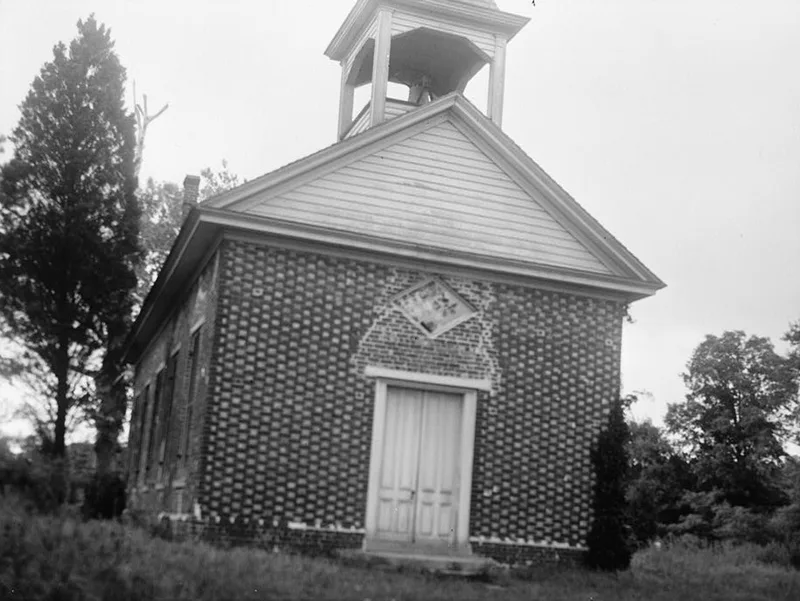
Once nicknamed "The Ace of Clubs Church" for its Latin-cross plan and rounded apse, St. George's Church in Pungoteague, Accomack County, was known as Pungoteague Church until 1800. It is thought to have been built in 1738, replacing perhaps two earlier structures. The church was abandoned during the War of 1812, restored seven years later, and then damaged in the Civil War, when Federal troops used it as a stable and took bricks from one wing. It stood roofless until 1880, when parts of the transepts were renovated to serve as the main body. Only the north and south walls and some end bays of the original building survive. The south wall is admired as one of the most beautiful examples of colonial Flemish bond with glazed headers in the country. The church is one of only two colonial churches left on Virginia's Eastern Shore and occupies a site held sacred since the mid-seventeenth century.
Significance in brief: The south wall preserves some of the finest colonial Flemish bond brickwork with glazed headers in the country. The church is one of only two colonial churches remaining on Virginia's Eastern Shore. It also stands on a site held sacred since the mid-seventeenth century, making it a significant religious landmark.
Machine-generated summary. This summary was generated by a language model from the official nomination document and has not been reviewed line by line by an editor. It may contain errors. Check the source document before relying on any detail. Source: nomination document (PDF) · National Archives catalog entry. NRHP reference 70000781, listed September 15, 1970. Summary generated October 2026 (model claude-sonnet-5-5, prompt v1.0-2026-10-29, confidence high).
Key facts
| Address | VA 178, NE of jct. with VA 180, Pungoteague |
|---|---|
| County | Accomack County |
| Listed | September 15, 1970 |
| Reference number | 70000781 |
| Resource type | Building |
| Period of significance | 18th Century, 19th Century |
| Architectural style | Original colonial Latin-cross plan; post-Civil War trim in simple Greek Revival style |
| Areas of significance | Politics/Government, Architecture |
| Level of significance | State |
| Status (as stated in the nomination) | Condition rated good and altered; occupied, in religious use. A modern parish hall stands to the east. |
| Acreage | 9.9 |
| Coordinates | 37.63402, -75.81078 (NPS GIS) |
What listing means for this property
Religious properties are listed for their architectural or historical significance, not their religious use. Listing is honorary and does not restrict the congregation's use of the building. The federal rehabilitation credit is generally unavailable unless part of the building is income-producing; some state programmes and preservation grants do cover religious buildings. Federal funding or permits trigger Section 106 review.
General information, not legal or tax advice. Rules change; confirm with your State Historic Preservation Office or a qualified adviser.
Sources and further reading
- National Park Service, National Register of Historic Places database (snapshot May 2026), reference 70000781.
- Nomination form (PDF, National Archives) — catalog entry
- Wikipedia article (used for cross-checking only; text not reproduced here)
- Wikidata Q7588122
- This listing as JSON
Last updated October 2026. Found an error? See the editorial policy for how to report it.