Menger Soap Works

Why it's listed
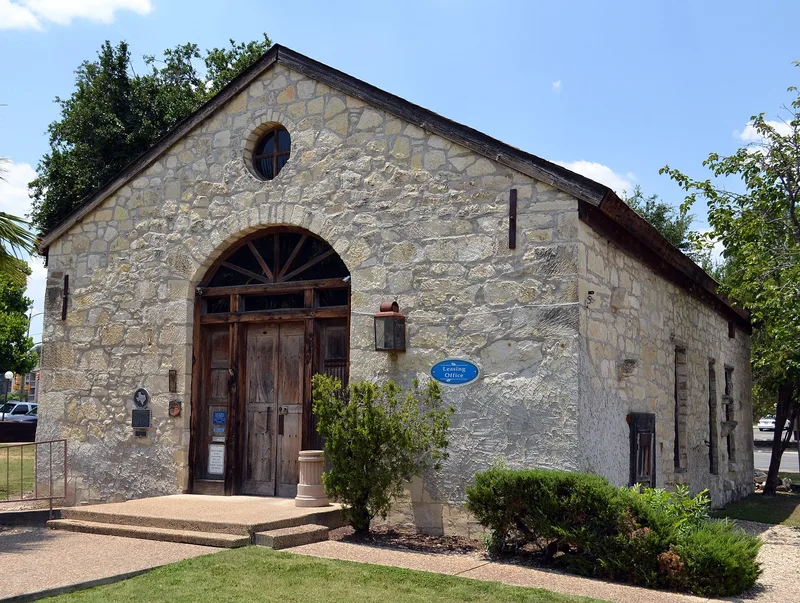
Built in 1850 beside San Pedro Creek in San Antonio, this two-story limestone building housed the city's first manufacturing enterprise, a soap factory founded by German immigrant Johann Nicholas Simon Menger, who had earlier worked as the city's first classroom music teacher. Large monolithic stone blocks form the base and corners, with smaller limestone rubble above, a technique similar to that used in the Spanish missions. Tall windows and high ceilings provided ventilation for the heated vats. Suet from local butchers was combined with creek water, lye and acids, and the soap was shipped by wagon and rail across Texas and the Southwest. Menger's son Erich ran the firm until shortly before World War I, after which the building sat vacant for years. It became apartments in 1950, losing its chimney, floors and a section on Martin Street. Described as the only pre-Civil War industrial building remaining in Texas, it was threatened with demolition, and preservationists sought to buy and restore it.
Significance in brief: It was San Antonio's first manufacturing enterprise and possibly the first soap factory in the Southwest. The nomination calls it a significant and rare example of industrial architecture, the only pre-Civil War industrial building remaining in Texas and perhaps the Southwest.
Machine-generated summary. This summary was generated by a language model from the official nomination document and has not been reviewed line by line by an editor. It may contain errors. Check the source document before relying on any detail. Source: nomination document (PDF) · National Archives catalog entry. NRHP reference 73001958, listed December 12, 1973. Summary generated October 2026 (model claude-sonnet-5-5, prompt v1.0-2026-10-29, confidence high).
Key facts
| Address | 400 block of N. Laredo St., San Antonio |
|---|---|
| County | Bexar County |
| Listed | December 12, 1973 |
| Reference number | 73001958 |
| Resource type | Building |
| Period of significance | 19th Century (specific date 1850) |
| Architectural style | Vernacular limestone |
| Areas of significance | Industry, Architecture |
| Level of significance | State |
| Status (as stated in the nomination) | Listed as vacant in the present-use section and in fair-to-good condition (Good checked, altered). Converted to apartments in 1950 and recently threatened with demolition; the San Antonio Conservation Society hoped to purchase and restore it. |
| Acreage | 2.1 |
| Coordinates | 29.42883, -98.49668 (NPS GIS) |
What listing means for this property
For an income-producing building, listing (individually or as a contributing building in a district) is the gateway to the 20% federal rehabilitation tax credit on qualified rehabilitation costs, often stackable with state credits. Work claiming the credit must follow the Secretary of the Interior's Standards and be approved in advance.
Listing does not restrict a private owner acting without federal money or permits; where federal funding or licensing is involved, Section 106 review applies.
Noted as vacant in the nomination. Nomination documents can be decades old; current status may differ. If you are considering buying an empty listed property, read the due-diligence checklist.
General information, not legal or tax advice. Rules change; confirm with your State Historic Preservation Office or a qualified adviser.
Sources and further reading
- National Park Service, National Register of Historic Places database (snapshot May 2026), reference 73001958.
- Nomination form (PDF, National Archives) — catalog entry
- Wikidata Q110000433
- This listing as JSON
Last updated October 2026. Found an error? See the editorial policy for how to report it.