Stenton
Also known as: James Logan Home; Stenton Mansion

Why it's listed
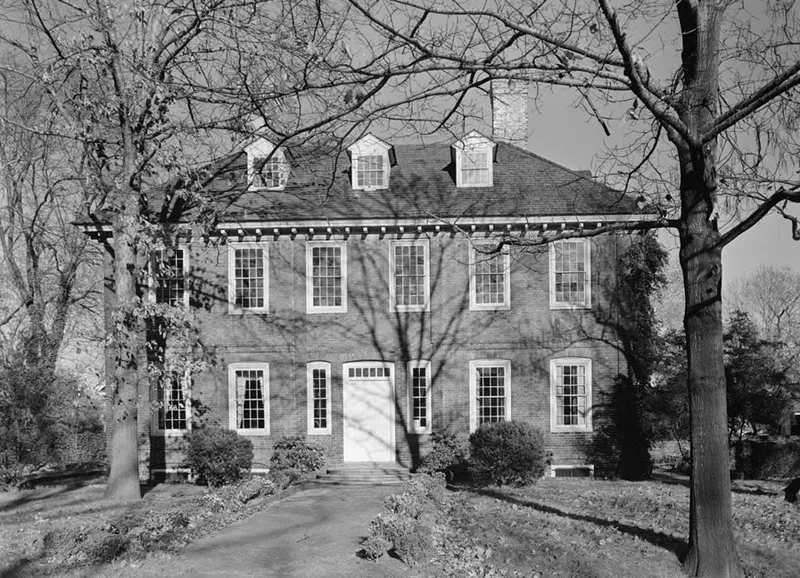
Built around 1728 in Germantown, Philadelphia, Stenton is a two-and-a-half story brick house by James Logan, a secretary to William Penn who later served as chief justice and acting governor of Pennsylvania. Its Flemish bond brick walls, regular Early Georgian facade and flanking side-lights set it apart, and its long library across the second floor once held Logan's scientific collection, which the nomination describes as one of the finest in the colonies. Logan's experiments on corn in 1727 and 1728 proved that pollen was necessary for the production of viable seed, a finding that was published in 1735-36 and remained influential for decades. The house, with its stone kitchen, orangery and barn, is also important for its association with Logan's public and scientific career. The interior is furnished by the Society of Colonial Dames using inventories of Logan's furniture.
Significance in brief: The nomination argues that Stenton is significant as a memorial to James Logan, a little-known but influential colonial figure, and as an outstanding example of Early Georgian architecture. It also cites Logan's library, one of the best in the colonies, and his botanical experiment proving the role of pollen in the fertilization of corn.
Machine-generated summary. This summary was generated by a language model from the official nomination document and has not been reviewed line by line by an editor. It may contain errors. Check the source document before relying on any detail. Source: nomination document (PDF) · National Archives catalog entry. NRHP reference 66000690, listed October 15, 1966. Summary generated October 2026 (model claude-haiku-5-5, prompt v1.1-2026-10-29, confidence medium).
Key facts
| Address | 18th and Courtland Sts., Philadelphia |
|---|---|
| County | Philadelphia |
| Listed | October 15, 1966 |
| Reference number | 66000690 |
| Resource type | Building |
| Period of significance | 1728 |
| Architect / builder | James Logan |
| Architectural style | Early Georgian |
| Areas of significance | Science, Architecture |
| Level of significance | National |
| National Historic Landmark | Yes, designated January 12, 1965 |
| Status (as stated in the nomination) | The interior is maintained by the Society of Colonial Dames, and the document describes the house as maintained in excellent condition by the City of Philadelphia and the Society of Colonial Dames. |
| Acreage | 4 |
| Coordinates | 40.02477, -75.15376 (NPS GIS) |
What listing means for this property
National Register listing is honorary: it recognises significance and does not restrict what a private owner may do without federal money or permits. It unlocks the 20% federal rehabilitation tax credit for income-producing buildings, state credits in many states, and Section 106 review when federal agencies are involved. See what listing means in practice.
General information, not legal or tax advice. Rules change; confirm with your State Historic Preservation Office or a qualified adviser.
Sources and further reading
- National Park Service, National Register of Historic Places database (snapshot May 2026), reference 66000690.
- Nomination form (PDF, National Archives) — catalog entry
- Wikipedia article (used for cross-checking only; text not reproduced here)
- Wikidata Q7607938
- This listing as JSON
Last updated October 2026. Found an error? See the editorial policy for how to report it.