Landis Valley Museum
Also known as: Landis, George and Henry, Homestead

Why it's listed
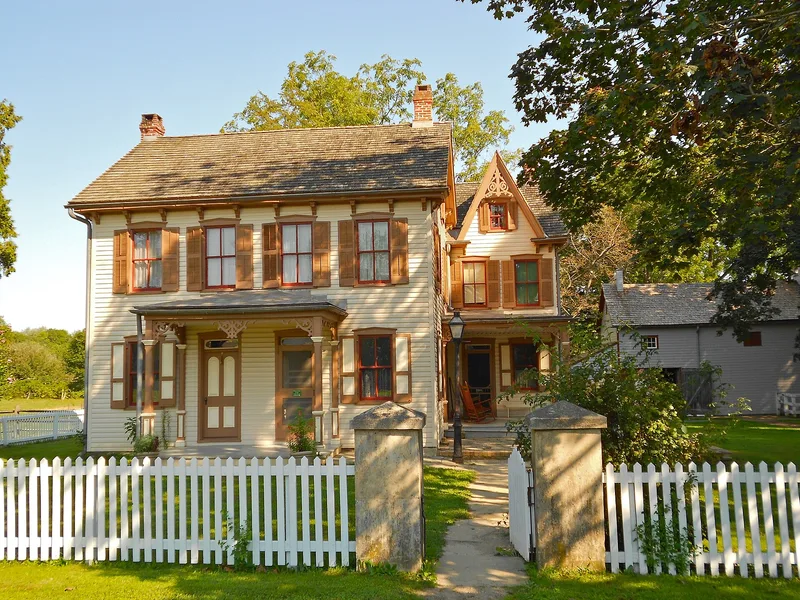
Located at a former crossroads in Manheim Township, Lancaster County, the Landis Valley Museum grew from a farmstead owned by brothers Henry Kinzer Landis and George Diller Landis. Both were engineers who retired in 1924 and began concentrating on collecting, focusing on Pennsylvania German material culture. In 1925 they opened their farm buildings to the public as a barn museum, hanging objects on exterior walls and filling the house, stable and sheds. By 1939 Henry estimated their holdings at more than 150,000 items and 20,000 books. In 1940 they incorporated the museum with the Oberlaender Trust. The Commonwealth of Pennsylvania acquired it in 1953. Henry arranged objects by type rather than in recreated settings, and he wrote columns in Pennsylvania German dialect. The museum is regarded as an early example of a folk-life museum in the region, preserving tools and everyday objects of the preindustrial past.
Significance in brief: The nomination argues the museum is significant under Criterion A as an early 20th century local history museum reflecting popular interest in American history and folk arts. It is also significant under Criterion B for its association with Henry Kinzer Landis, who initiated the museum. The brothers collected Pennsylvania German material culture and opened their collections to the public in 1925.
Machine-generated summary. This summary was generated by a language model from the official nomination document and has not been reviewed line by line by an editor. It may contain errors. Check the source document before relying on any detail. Source: nomination document (PDF) · National Archives catalog entry. NRHP reference 99001578, listed January 3, 2000. Summary generated October 2026 (model claude-haiku-5-5, prompt v1.1-2026-10-29, confidence medium).
Key facts
| Address | 2451 Kissel Hill Rd. (Manheim Township), Landis Valley |
|---|---|
| County | Lancaster County |
| Listed | January 3, 2000 |
| Reference number | 99001578 |
| Resource type | District |
| Period of significance | 1925-1953 |
| Criteria |
|
| Areas of significance | Entertainment/Recreation |
| Level of significance | National |
| Acreage | 8.6 |
| Coordinates | 40.09351, -76.27973 (NPS GIS) |
What listing means for this property
This is a historic district. Buildings within its boundary are either contributing (they add to the district's significance) or non-contributing. Owners of contributing income-producing buildings can claim the 20% federal rehabilitation tax credit; homeowners should look at state credits. National Register districts impose no design review by themselves; a local historic district ordinance, if one exists, does (the difference explained).
General information, not legal or tax advice. Rules change; confirm with your State Historic Preservation Office or a qualified adviser.
Sources and further reading
- National Park Service, National Register of Historic Places database (snapshot May 2026), reference 99001578.
- Nomination form (PDF, National Archives) — catalog entry
- Wikipedia article (used for cross-checking only; text not reproduced here)
- Wikidata Q12061092
- This listing as JSON
Last updated October 2026. Found an error? See the editorial policy for how to report it.