Pusey, Caleb, House
Also known as: See Also:Pusey-Crozier Mill Historic District

Why it's listed
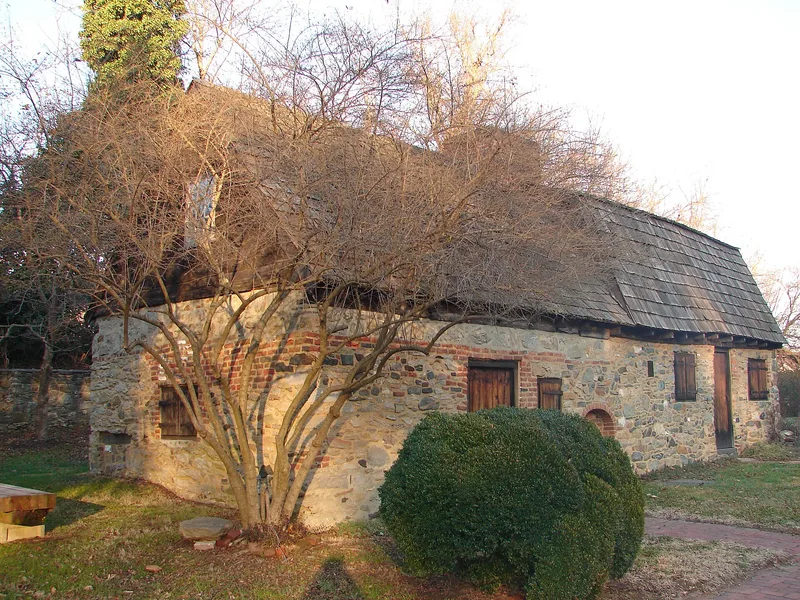
Built of native stone in Upland, Delaware County, Pennsylvania, the Caleb Pusey House was constructed in two sections probably a few years apart. The eastern portion has a simple plan of one great room below and a loft above, reflecting the vernacular yeoman houses of Berkshire, England, where Pusey was born in 1651. The western section is believed to have been roofed and completed by 1696, when Chester Monthly Meeting held sessions there. A large walk-in fireplace and bake oven originally stood in the center wall, later replaced by corner fireplaces in the early nineteenth century. The house is regarded as the earliest surviving English-built house in Pennsylvania. It is also the only dwelling in America in which William Penn is known to have visited on at least one occasion. Pusey, a shoemaker's last maker, received a share in a mill established in 1681 and later served in the Pennsylvania Assembly and the Executive Council before dying in Marlborough Township in 1727.
Significance in brief: The nomination argues the house is the earliest surviving English-built house in Pennsylvania and the only dwelling in America in which William Penn is known to have visited. Its vernacular stone construction follows sixteenth and early seventeenth century yeoman house traditions from Berkshire. Pusey was associated with a local mill and later served in provincial public office.
Machine-generated summary. This summary was generated by a language model from the official nomination document and has not been reviewed line by line by an editor. It may contain errors. Check the source document before relying on any detail. Source: nomination document (PDF) · National Archives catalog entry. NRHP reference 71000706, listed March 11, 1971. Summary generated October 2026 (model claude-haiku-5-5, prompt v1.1-2026-10-29, confidence medium).
Key facts
| Address | 15 Race St., Upland |
|---|---|
| County | Delaware County |
| Listed | March 11, 1971 |
| Reference number | 71000706 |
| Resource type | Building |
| Period of significance | 17th Century |
| Areas of significance | Architecture |
| Level of significance | National |
| Status (as stated in the nomination) | The interior has been restored to a 1725 cutoff date by the Friends of the Caleb Pusey House, Inc. |
| Acreage | 9 |
| Coordinates | 39.85122, -75.38658 (NPS GIS) |
What listing means for this property
National Register listing is honorary for a privately owned home: it does not by itself restrict what an owner may do with their own money, and it does not require public access. Restrictions come from local landmark or historic-district ordinances, which are separate (how they differ).
Owner-occupied houses are not eligible for the 20% federal rehabilitation tax credit, which applies to income-producing buildings, but many states offer credits for homeowners. Listing also opens the door to preservation easements and to buying a plaque. Start with what listing means for homeowners, renovating a listed house and selling one.
General information, not legal or tax advice. Rules change; confirm with your State Historic Preservation Office or a qualified adviser.
Sources and further reading
- National Park Service, National Register of Historic Places database (snapshot May 2026), reference 71000706.
- Nomination form (PDF, National Archives) — catalog entry
- Wikipedia article (used for cross-checking only; text not reproduced here)
- Wikidata Q5019278
- This listing as JSON
Last updated October 2026. Found an error? See the editorial policy for how to report it.