Liberty Theatre
Also known as: Paramount Theatre

Why it's listed
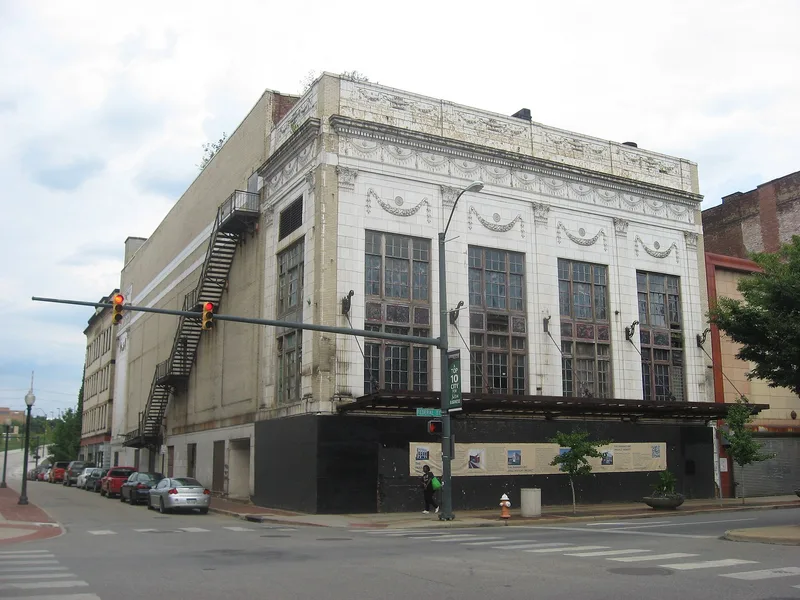
Opened on February 11, 1918, this three-story theatre on West Federal Street in downtown Youngstown was the city's first motion picture palace and its largest and most elaborate theatre. Designed by C. Howard Crane of Detroit, it replaced the Civil War-era Excelsior Block and was built during World War I despite steel shortages. The front is glazed buff terra cotta with Corinthian pilasters, garlands and a deep cornice, topped by a large metal marquee. Inside, a tall auditorium with balcony features restrained classical plasterwork, a sunburst ceiling centerpiece and three crystal chandeliers at the mezzanine. Paramount Pictures bought the building in 1929 and refurbished it for sound films. It operated until the mid-1970s. Later changes included a modernized lobby, a suspended ceiling beneath the proscenium arch and removal of the loge boxes. Its significance rests on its rare, restrained Neoclassical design and its status as Youngstown's oldest surviving theatre.
Significance in brief: The nomination argues it is a rare, relatively well-preserved example of early twentieth century theatre architecture and the oldest surviving theatre in Youngstown. It is a restrained early Neoclassical design reflecting the Federal and Adam revival, the only theatre of this style in the Youngstown-Warren area, and one of the oldest surviving early movie palaces in Ohio.
Machine-generated summary. This summary was generated by a language model from the official nomination document and has not been reviewed line by line by an editor. It may contain errors. Check the source document before relying on any detail. Source: nomination document (PDF) · National Archives catalog entry. NRHP reference 84003776, listed February 9, 1984. Summary generated October 2026 (model claude-sonnet-5-5, prompt v1.0-2026-10-29, confidence high).
Key facts
| Address | 142 Federal Plaza W., Youngstown |
|---|---|
| County | Mahoning County |
| Listed | February 9, 1984 |
| Reference number | 84003776 |
| Resource type | Building |
| Period of significance | 1917-1918 |
| Architect / builder | C. Howard Crane, Detroit |
| Architectural style | Neoclassical (Federal/Adam revival influence) |
| Criteria |
|
| Areas of significance | Architecture |
| Level of significance | Local |
| Status (as stated in the nomination) | Listed as unoccupied; it operated as a theatre until the mid-1970s and was sold in 1983 to new owners who planned to restore it as a movie theatre and performance center. |
| Acreage | 0.9 |
| Coordinates | 41.10110, -80.65136 (NPS GIS) |
What listing means for this property
For an income-producing building, listing (individually or as a contributing building in a district) is the gateway to the 20% federal rehabilitation tax credit on qualified rehabilitation costs, often stackable with state credits. Work claiming the credit must follow the Secretary of the Interior's Standards and be approved in advance.
Listing does not restrict a private owner acting without federal money or permits; where federal funding or licensing is involved, Section 106 review applies.
Noted as vacant in the nomination. Nomination documents can be decades old; current status may differ. If you are considering buying an empty listed property, read the due-diligence checklist.
General information, not legal or tax advice. Rules change; confirm with your State Historic Preservation Office or a qualified adviser.
Sources and further reading
- National Park Service, National Register of Historic Places database (snapshot May 2026), reference 84003776.
- Nomination form (PDF, National Archives) — catalog entry
- Wikipedia article (used for cross-checking only; text not reproduced here)
- Wikidata Q6541543
- This listing as JSON
Last updated October 2026. Found an error? See the editorial policy for how to report it.