Root, William H., House

Why it's listed
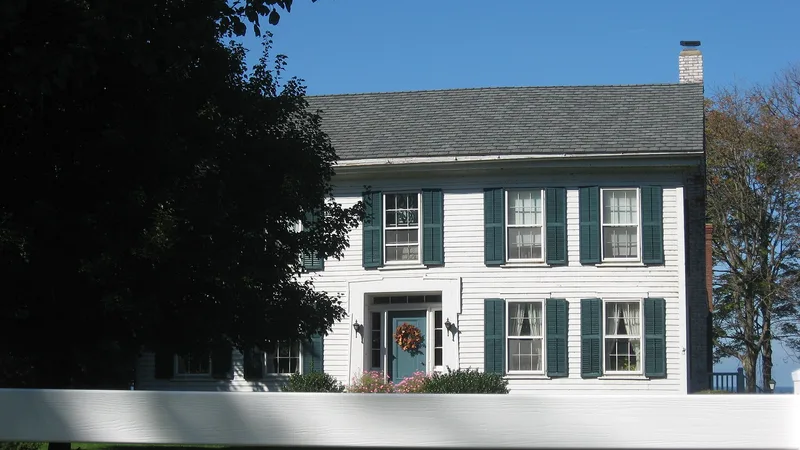
Built between 1845 and 1850 on a wooded lot along Lake Erie, this large two-story wood-frame farmhouse in Lorain, Ohio, shows the Greek Revival style at its fullest. The clapboard front has five bays and a central doorway framed by sloping, Egyptian-influenced molding. The gable carries a strong cornice with partial returns. Inside, a central hall runs the length of the house, and the parlors have fluted pilasters and an articulated entablature. William H. Root, son of Sheffield pioneer Henry Root, farmed, ran a steam sawmill on the Black River and served as justice of the peace. The house stayed in the Root family until 1976. It is described as one of only a few pre-Civil War lakefront farmhouses in Lorain County, the best survivor, and the city's only major Greek Revival example. Probate records date it, and it may be the work of Ezra Jackson, who is credited with a similar house nearby.
Significance in brief: The nomination calls it an excellent example of Greek Revival style with fine craftsmanship and distinctive ornament. Its large size reflects the prosperity of its original owner. It is one of a handful of pre-Civil War lakefront farmhouses in Lorain County and the best survivor, and it is the city's only major Greek Revival example. It also keeps a rural setting within an urbanized area.
Machine-generated summary. This summary was generated by a language model from the official nomination document and has not been reviewed line by line by an editor. It may contain errors. Check the source document before relying on any detail. Source: nomination document (PDF) · National Archives catalog entry. NRHP reference 78002110, listed September 20, 1978. Summary generated October 2026 (model claude-sonnet-5-5, prompt v1.0-2026-10-29, confidence high).
Key facts
| Address | 3535 E. Erie Ave., Lorain |
|---|---|
| County | Lorain County |
| Listed | September 20, 1978 |
| Reference number | 78002110 |
| Resource type | Building |
| Period of significance | 1845-50 |
| Architect / builder | Ezra Jackson |
| Architectural style | Greek Revival |
| Areas of significance | Politics/Government, Architecture |
| Level of significance | Local |
| Status (as stated in the nomination) | Recently rehabilitated: the front portion was restored with new wiring and heating, the rear wing was remodeled into a kitchen and family room, and the exterior was cleaned and repainted. The form marks it as occupied. |
| Acreage | 2 |
| Coordinates | 41.48438, -82.13108 (NPS GIS) |
What listing means for this property
National Register listing is honorary for a privately owned home: it does not by itself restrict what an owner may do with their own money, and it does not require public access. Restrictions come from local landmark or historic-district ordinances, which are separate (how they differ).
Owner-occupied houses are not eligible for the 20% federal rehabilitation tax credit, which applies to income-producing buildings, but many states offer credits for homeowners. Listing also opens the door to preservation easements and to buying a plaque. Start with what listing means for homeowners, renovating a listed house and selling one.
General information, not legal or tax advice. Rules change; confirm with your State Historic Preservation Office or a qualified adviser.
Sources and further reading
- National Park Service, National Register of Historic Places database (snapshot May 2026), reference 78002110.
- Nomination form (PDF, National Archives) — catalog entry
- Wikidata Q138508670
- This listing as JSON
Last updated October 2026. Found an error? See the editorial policy for how to report it.