Warszawa Neighborhood District
Also known as: See Also:St. Stanislaus Church

Why it's listed
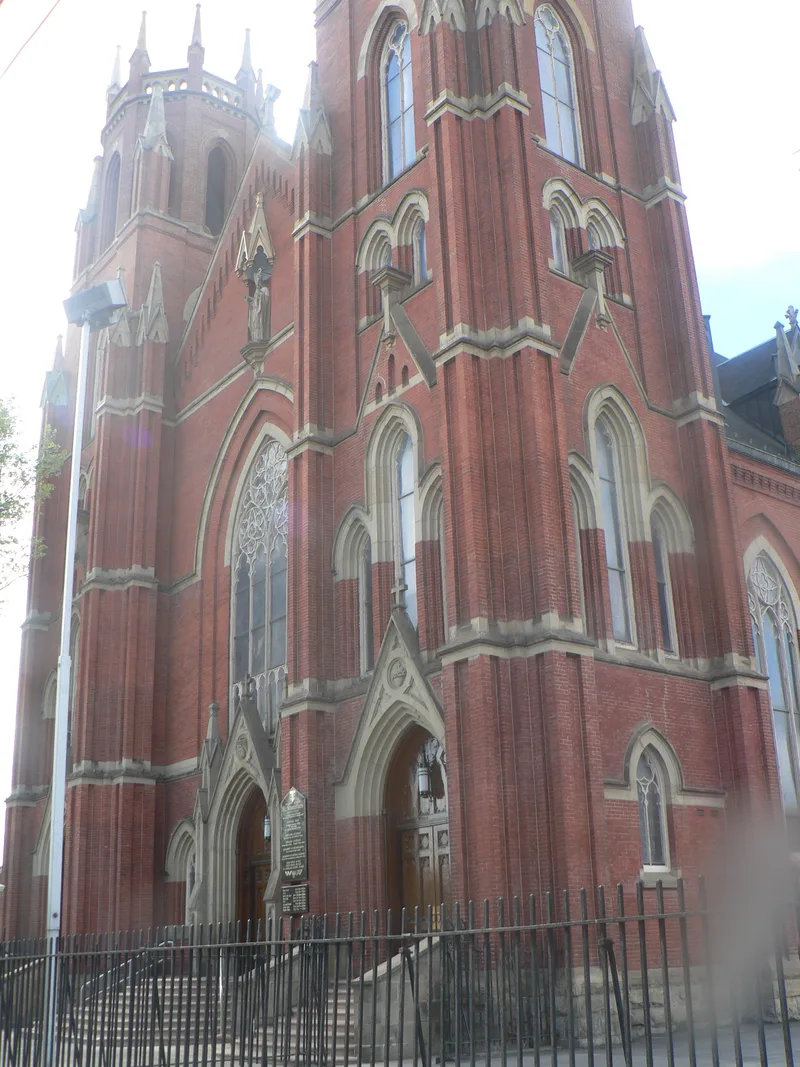
Warszawa Neighborhood District is a nine-acre area of Cleveland centered on East 65th Street, with one block extending east along Forman Avenue. Its two-story wood-frame commercial and residential buildings date from 1880 to 1920, and many show Queen Anne features such as gable dormers, oriel bays and recessed second-story porches. At the north end stands the brick Victorian Gothic St. Stanislaus Church, with its rectory, convent, high school and elementary school. The district was the core of a neighborhood that grew with Polish immigration to Cleveland, which began in the 1870s and peaked in the early 1900s as workers came for jobs at the nearby rolling mills. Michael Kniola's travel bureau helped newcomers book passage, translate letters and deal with officials, and his office still holds extensive records. The large brick home of paving contractor Frank Orlikowski is also notable. The district was listed because it shows immigrant community life and vernacular architecture.
Significance in brief: The district is the core of Warszawa, the primary Polish neighborhood of three major ones in Cleveland, which housed a large Polish immigrant population around 1900. Its vernacular buildings show how immigrants adapted to American building traditions rather than importing Old World forms. It also contains major landmarks: St. Stanislaus Church, the Kniola Travel Bureau and the Orlikowski residence.
Machine-generated summary. This summary was generated by a language model from the official nomination document and has not been reviewed line by line by an editor. It may contain errors. Check the source document before relying on any detail. Source: nomination document (PDF) · National Archives catalog entry. NRHP reference 80002980, listed November 28, 1980. Summary generated October 2026 (model claude-sonnet-5-5, prompt v1.0-2026-10-29, confidence medium).
Key facts
| Address | E. 65th St. and Forman Ave., Cleveland |
|---|---|
| County | Cuyahoga County |
| Listed | November 28, 1980 |
| Reference number | 80002980 |
| Resource type | District |
| Period of significance | 1880-1920 |
| Architectural style | Late 19th century vernacular "Queen Anne"; Victorian Gothic (St. Stanislaus Church) |
| Areas of significance | Exploration/Settlement, Architecture, Religion, Social History |
| Level of significance | Local |
| Status (as stated in the nomination) | Described as a viable Polish-American residential and commercial district with some alterations, such as permastone, aluminum siding and jigsaw trim, that do not undermine its overall integrity. |
| Acreage | 9 |
| Coordinates | 41.45815, -81.64461 (NPS GIS) |
What listing means for this property
This is a historic district. Buildings within its boundary are either contributing (they add to the district's significance) or non-contributing. Owners of contributing income-producing buildings can claim the 20% federal rehabilitation tax credit; homeowners should look at state credits. National Register districts impose no design review by themselves; a local historic district ordinance, if one exists, does (the difference explained).
General information, not legal or tax advice. Rules change; confirm with your State Historic Preservation Office or a qualified adviser.
Sources and further reading
- National Park Service, National Register of Historic Places database (snapshot May 2026), reference 80002980.
- Nomination form (PDF, National Archives) — catalog entry
- Wikipedia article (used for cross-checking only; text not reproduced here)
- Wikidata Q7566418
- This listing as JSON
Last updated October 2026. Found an error? See the editorial policy for how to report it.