Roscoe Village

Why it's listed
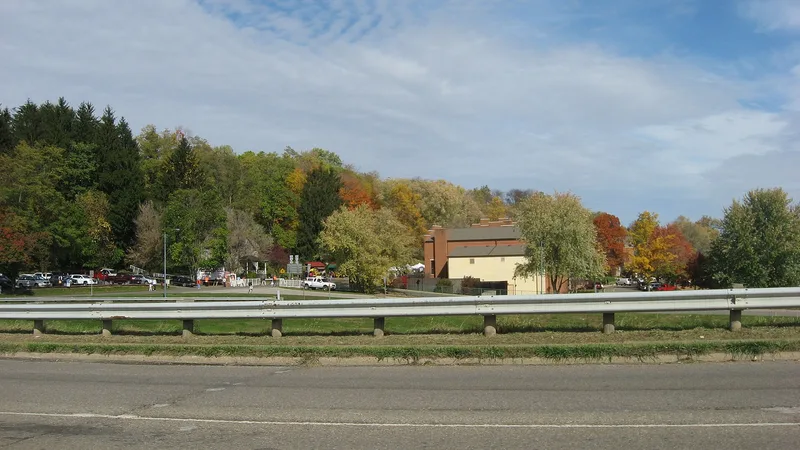
Roscoe Village is a restored canal town in Coshocton, Ohio, covering about 24 acres along the Ohio-Erie Canal. Founded in 1816 as Caldersburg, it was renamed in 1830 for the English poet William Roscoe. When the first canal boat arrived that year, the village became a leading shipping center, with warehouses, mills, taverns, a pottery and a hotel, and its population nearly doubled in a decade. The railroad later bypassed the town, and it declined, while the 1913 flood wrecked much of the canal. The surviving buildings fall into two groups: red brick Greek Revival structures from 1830 to 1860 with gabled or stepped-gable roofs, and small Victorian frame houses from 1850 to 1900. Restoration, led by the Montgomery Foundation after 1960, has turned many into shops, a restaurant, museums and offices. A mile of canal and a replica boat, the Monticello II, were also restored.
Significance in brief: The nomination argues the village recalls the canal era in Ohio, when the canal system stimulated population growth and trade in towns along its route. Roscoe became a leading shipping center for farmers and craftsmen after the first canal boat arrived in 1830. Its Greek Revival brick buildings and Victorian frame houses survive and have been restored. The form notes that growth ended abruptly when the railroad bypassed the village.
Machine-generated summary. This summary was generated by a language model from the official nomination document and has not been reviewed line by line by an editor. It may contain errors. Check the source document before relying on any detail. Source: nomination document (PDF) · National Archives catalog entry. NRHP reference 73001403, listed April 3, 1973. Summary generated October 2026 (model claude-sonnet-5-5, prompt v1.0-2026-10-29, confidence high).
Key facts
| Address | Whitewoman and High Sts., Coshocton |
|---|---|
| County | Coshocton County |
| Listed | April 3, 1973 |
| Reference number | 73001403 |
| Resource type | District |
| Period of significance | 19th Century |
| Architectural style | Greek Revival (classic revival) brick buildings, 1830-1860, and village Victorian frame houses, 1850-1900 |
| Areas of significance | Commerce, Transportation, Architecture |
| Level of significance | State |
| Status (as stated in the nomination) | Described as in excellent to good condition, altered, with preservation work in progress. Buildings are in commercial, museum and residential use, and the Montgomery Foundation leads the restoration. |
| Acreage | 24 |
| Coordinates | 40.27838, -81.87593 (NPS GIS) |
What listing means for this property
This is a historic district. Buildings within its boundary are either contributing (they add to the district's significance) or non-contributing. Owners of contributing income-producing buildings can claim the 20% federal rehabilitation tax credit; homeowners should look at state credits. National Register districts impose no design review by themselves; a local historic district ordinance, if one exists, does (the difference explained).
General information, not legal or tax advice. Rules change; confirm with your State Historic Preservation Office or a qualified adviser.
Sources and further reading
- National Park Service, National Register of Historic Places database (snapshot May 2026), reference 73001403.
- Nomination form (PDF, National Archives) — catalog entry
- Wikipedia article (used for cross-checking only; text not reproduced here)
- Wikidata Q7367538
- This listing as JSON
Last updated October 2026. Found an error? See the editorial policy for how to report it.