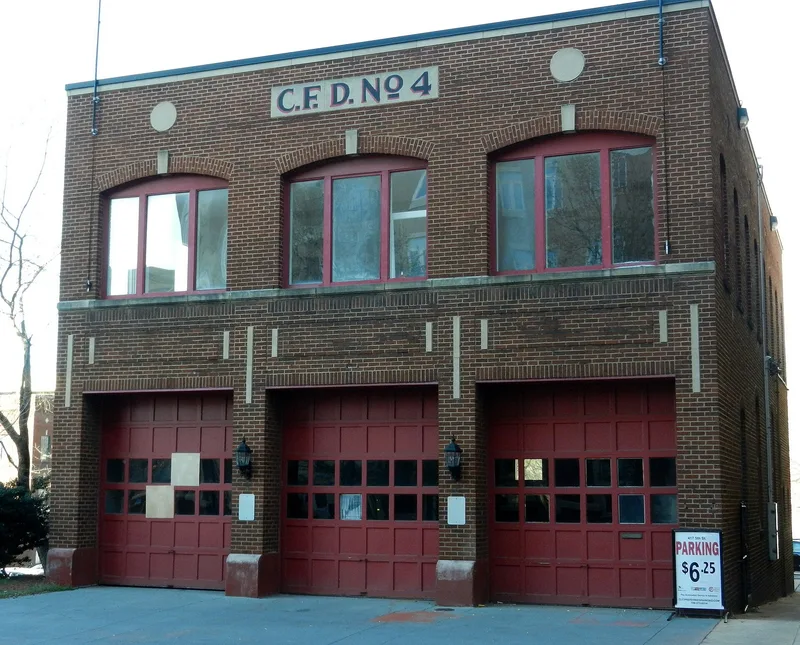
Charlotte Fire Station No. 4
Charlotte Fire Station No. 4 is a building in Charlotte, Mecklenburg County, North Carolina, listed on the National Register of Historic Places on December 20, 2016 (reference number 16000879). The National Park Service records its significance in Politics/Government at the local level.
Facts from the NPS National Register database (). Last updated . Sources for each fact.

Approximate location: the National Park Service places this pin arbitrarily within the property, not at a surveyed point (stated accuracy ±12 m).
Why it's listed
No readable nomination text is available for this listing yet (nominations after 2012 are held by the National Park Service rather than the National Archives). The facts below come from the National Park Service database.
Key facts
| Official database NPS National Register database, ref. 16000879 , checked | |
|---|---|
| Address | 420 W. 5th St., Charlotte |
| County | Mecklenburg County |
| Listed | December 20, 2016 |
| Reference number | 16000879 |
| Resource type | Building |
| Areas of significance | Politics/Government |
| Level of significance | Local |
| National Historic Landmark | No |
| Acreage | 0.22 |
| Official dataset NPS cultural-resource GIS (NRHP locations) | |
| Coordinates | 35.23130, -80.84535 |
What listing means for this property
For a publicly owned building or structure, listing mainly matters when federal funds, permits or licences are involved: projects then go through Section 106 review so effects on the property are considered. Listing also strengthens applications for preservation grants and, for leased income-producing uses, can enable the federal rehabilitation tax credit.
General information, not legal or tax advice. Rules change; confirm with your State Historic Preservation Office or a qualified adviser.
Sources and further reading
- National Park Service, National Register of Historic Places database (snapshot May 2026), reference 16000879.
- Wikipedia article (used for cross-checking only; text not reproduced here)
- Wikidata Q106645483
- This listing as JSON
Last updated November 2026. Found an error? See the editorial policy for how to report it.