Oxford Historic District (Boundary Increase and Decrease)
Also known as: See Also:Granville County Courthouse
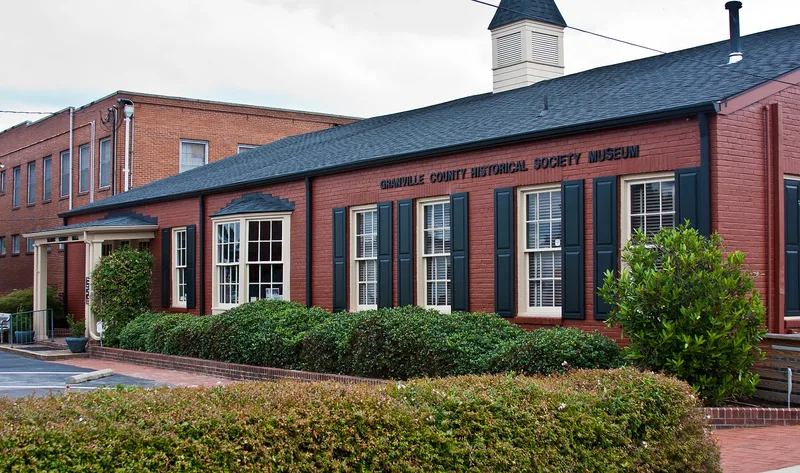

Why it's listed
Oxford's historic district covers the earliest developed part of the Granville County town. It spreads along College, Main, Gilliam, High and Front streets and neighboring blocks. Of its roughly 246 properties, most are houses, with churches, banks, government buildings and tobacco facilities mixed in. A commercial area radiates from the 1838 Granville County Courthouse, a Greek Revival building of Flemish bond brick that has served continuously as a courthouse. Surviving antebellum houses are timber-framed and weatherboarded, with examples such as the Marcellus Lanier House and the Titus Grandy House. After the Civil War, building recovered in the 1880s, producing Italianate, Queen Anne and Second Empire buildings. Fires in 1886 and 1887 led to rebuilding of the downtown in masonry. Colonial Revival and Neo-Classical houses followed between 1900 and 1930. Little was built from the Depression onward, and later additions are mostly small Colonial Revival and ranch houses. The district was listed because it preserves most of the town's nineteenth-century buildings and its significant early twentieth-century ones.
Significance in brief: The district holds most of Oxford's surviving nineteenth-century buildings and most of its significant early twentieth-century ones. It shows the town's growth from the antebellum period through the 1880s building boom to the early 1900s, with notable Greek Revival, Italianate, Queen Anne and Colonial Revival buildings. The significance statement itself is truncated in the text provided.
Machine-generated summary. This summary was generated by a language model from the official nomination document and has not been reviewed line by line by an editor. It may contain errors. Check the source document before relying on any detail. Source: nomination document (PDF) · National Archives catalog entry. NRHP reference 100005974, listed December 21, 2020. Summary generated October 2026 (model claude-sonnet-5-5, prompt v1.0-2026-10-29, confidence medium).
Key facts
| Address | Roughly bounded by Alexander and Sunset Aves., 3rd, Belle, Broad, Cherry, College, Devin, Franklin, Front, Gilliam, Granville, Henderson, Hillsboro, Lanier, Main, New College, Raleigh, and West Sts., and Martin Luther King Jr. Blvd., Oxford |
|---|---|
| County | Granville County |
| Listed | December 21, 2020 |
| Reference number | 100005974 |
| Resource type | District |
| Architect / builder | Jacob Holt and John Berry (St. John's College, now razed); J. H. Bryant (Bryant-Kingsbury House) |
| Architectural style | Colonial Revival, Queen Anne, Italianate, Greek Revival, Georgian/Federal, Gothic Revival, Neo-Classical Revival, Second Empire, Bungalow, Ranch |
| Areas of significance | Commerce, Architecture, Ethnic Heritage-Black, Social History |
| Level of significance | Local |
| Status (as stated in the nomination) | Many buildings remain in use as dwellings, shops, banks and government buildings. The 1838 courthouse has been in continual use as a courthouse. |
| Acreage | 130 |
| Within district | Oxford Historic District (Additional Documentation) |
| Coordinates | 36.31140, -78.59030 (Wikidata) |
What listing means for this property
This is a historic district. Buildings within its boundary are either contributing (they add to the district's significance) or non-contributing. Owners of contributing income-producing buildings can claim the 20% federal rehabilitation tax credit; homeowners should look at state credits. National Register districts impose no design review by themselves; a local historic district ordinance, if one exists, does (the difference explained).
General information, not legal or tax advice. Rules change; confirm with your State Historic Preservation Office or a qualified adviser.
Sources and further reading
- National Park Service, National Register of Historic Places database (snapshot May 2026), reference 100005974.
- Nomination form (PDF, National Archives) — catalog entry
- Wikipedia article (used for cross-checking only; text not reproduced here)
- Wikidata Q19987439
- This listing as JSON
Last updated October 2026. Found an error? See the editorial policy for how to report it.