Odell-Locke-Randolph Cotton Mill

Why it's listed
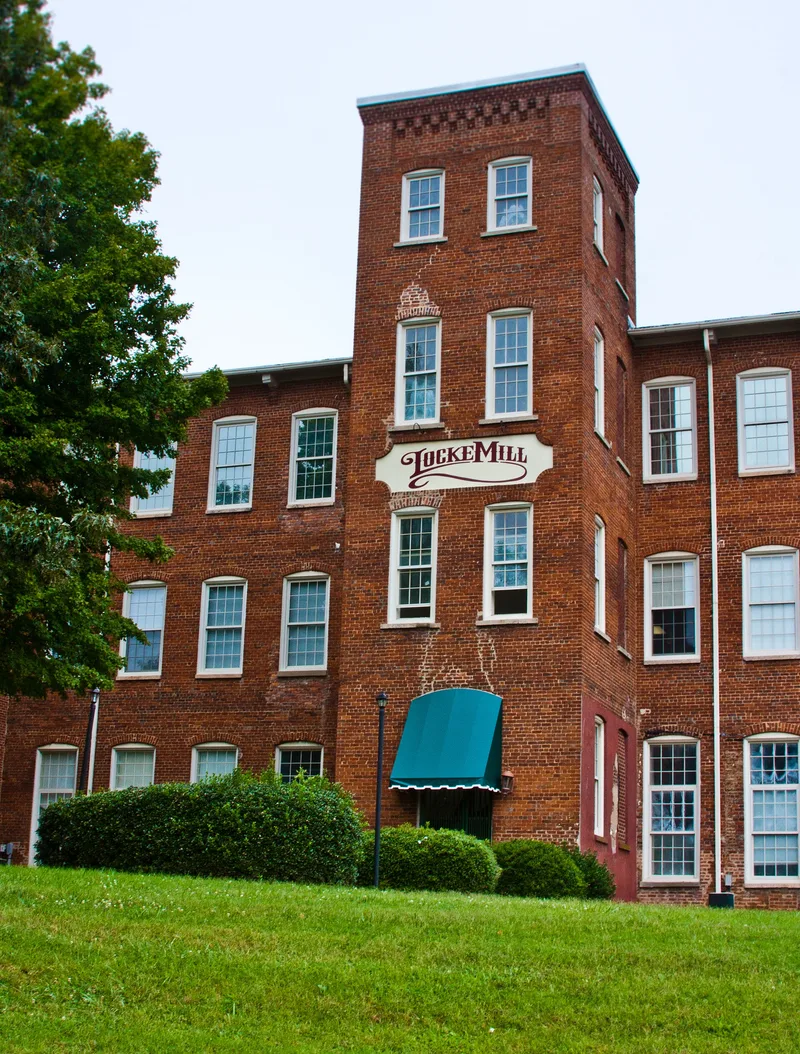
Located at the north end of Concord's Union Street, the Odell-Locke-Randolph Cotton Mill complex consists of three main brick mill buildings dated 1882, 1899 and 1909, plus nine supporting structures. The site has housed four textile enterprises from 1840 until 1974, interrupted only by a four-year closure after the financial panic of 1873. The Concord Manufacturing Company erected the original mill in 1839 or 1840, one of the earliest steam-powered cotton mills in North Carolina. John Milton Odell reopened the plant in 1877 and expanded it into one of the state's largest industrial complexes. The 1882 building is the oldest surviving structure and has a tower enclosing the stair, a practice required by factory insurers. The 1899 building has an impressive three-stage tower with a water tank for fire emergencies. The complex is significant for its role in launching Cabarrus County's textile industry and for its well-preserved mill architecture.
Significance in brief: The nomination argues the complex is the birthplace of Cabarrus County's textile industry and the county's most significant historic industrial site. It is associated with industrialist John Milton Odell, who drove the county's late nineteenth-century textile growth, and it is an excellent and relatively unaltered example of late nineteenth and early twentieth century textile mill design.
Machine-generated summary. This summary was generated by a language model from the official nomination document and has not been reviewed line by line by an editor. It may contain errors. Check the source document before relying on any detail. Source: nomination document (PDF) · National Archives catalog entry. NRHP reference 83001838, listed March 28, 1983. Summary generated October 2026 (model claude-haiku-5-5, prompt v1.1-2026-10-29, confidence high).
Key facts
| Address | Buffalo, Church, Peachtree, and Locust Sts., Concord |
|---|---|
| County | Cabarrus County |
| Listed | March 28, 1983 |
| Reference number | 83001838 |
| Resource type | Building |
| Period of significance | 1800-1899 |
| Criteria |
|
| Areas of significance | Industry, Architecture |
| Level of significance | National |
| Status (as stated in the nomination) | Vacant since the mill closed in 1974; a group of realtors purchased the complex at auction in November 1979 and was exploring rehabilitation. |
| Acreage | 11.9 |
| Within district | North Union Street Historic District |
| Coordinates | 35.41843, -80.59031 (NPS GIS) |
What listing means for this property
For an income-producing building, listing (individually or as a contributing building in a district) is the gateway to the 20% federal rehabilitation tax credit on qualified rehabilitation costs, often stackable with state credits. Work claiming the credit must follow the Secretary of the Interior's Standards and be approved in advance.
Listing does not restrict a private owner acting without federal money or permits; where federal funding or licensing is involved, Section 106 review applies.
Noted as vacant in the nomination. Nomination documents can be decades old; current status may differ. If you are considering buying an empty listed property, read the due-diligence checklist.
General information, not legal or tax advice. Rules change; confirm with your State Historic Preservation Office or a qualified adviser.
Sources and further reading
- National Park Service, National Register of Historic Places database (snapshot May 2026), reference 83001838.
- Nomination form (PDF, National Archives) — catalog entry
- Wikipedia article (used for cross-checking only; text not reproduced here)
- Wikidata Q18155324
- This listing as JSON
Last updated October 2026. Found an error? See the editorial policy for how to report it.